
Weekend Q&A Sessions: When You Arrive
Help, I can't get a real reason to get discipline back into my life


Welcome to this week’s Q&A session.
We are excited to have you in our community.
On the weekends, we dedicate a post to help you overcome your personal productivity problems.
Here’s how it works
Simply describe what’s affecting your productivity in a form we share.
(No emails or personal details asked).
We keep it anonymous so that the focus is only the productivity problem.
Every weekend, we select one response and dedicate a post on how to solve the problem all free.
The form is currently closed to allow us to address the productivity problems you shared last time.
Past Solutions
Some problems are also recurring. Here are some simple tutorials you can follow to solve your problems:
I have a problem with procrastination.
I have low motivation to begin a new task after a hard day
So many more solutions here. Just describe your problem and pick a tutorial.
The Productivity Problem
This weekend we look at the problem of arrival fallacy. You achieve goals you were previously striving for and once you get them, the urge to be disciplined vanishes. All you want to do is scroll on social media and relax.
A subscriber wrote in:
I feel that i am not able to reduce my screen time on phone. I need a some real reason to get back the discipline in my life. After i secured my 1st job, i have been very lazy and need to get back on track.
This is an interesting problem that I have experienced before.
You spend many months working towards a goal and soon enough you achieve it.
Now what?
At that moment, the engine that kept you motivated to keep going is switched off and a vacuum takes its place.
The real problem isn’t that you lack discipline - you already proved it by getting your first job. The real issue is the assumption that hitting one goal delivers lasting momentum.
However, as you discovered, crossing the finishing line by getting your first job removed the very thing that kept you disciplined. Without a goal to strive after, distraction fills the vacuum as you can’t stop scrolling.
How We Could Solve This
A. Begin with an honest self-audit
What you discover over time is that achieving financial security is just the first rung in a long ladder.
If you take an honest audit, you might find that you want to achieve several things after securing your job. Sometimes, it might be saving towards a new car, house, or even starting a family.
I love how Vicki Robin and Joseph Dominguez talk about this in Your Life Your Money.
“Money is something we choose to trade our life energy for. When you map your financial life, you eventually hit the peak of the Fulfillment Curve—the point called Enough.
Once you have enough for your survival, comfort, and even a few luxuries, the ladder of goals changes. Additional spending actually decreases fulfillment because it introduces complexity and clutter.
Beyond Enough, the goals you solve are no longer financial; they are existential. You move from the question of ‘How do I make a living?’ to the much deeper, more rewarding question of ‘What am I going to do with the life I have saved?’”
Think about answering this question:
“Now that I have secured a job, what else do I want out of life?”
Your answer will tell you what kind of goals you need to think about next.
B. Shift from goals to systems
James Clear famously tells us in Atomic Habits that if you want to achieve something once, set a goal. However, if you want to achieve something over and over again, create a system.
A system is just the set of processes you follow to achieve a goal.
“If you’re a coach, your goal might be to win a championship. Your system is the way you recruit players, manage your assistant coaches, and conduct practice. If you’re a writer, your goal might be to write a book. Your system is the writing schedule you follow each week. Problems arise when you spend too much time thinking about your goals and not enough time designing your systems.”
From the self-audit step 1, you might identify that you want to create a second income stream as a writer on Substack as another goal to achieve.
Rather than adopting your previous mindset where you only worked towards achieving the goal and stopped once you achieved it, create a system instead.
Decide how you will use your time away from work.
“I always write for 1 hour on Substack after work every weekday.”
You will discover that after you achieve your goal as a writer, the system to keep writing everyday will still be there. You can now shift towards another goal and this continues over and over again.
“A goal is a specific objective that you either achieve or don't sometime in the future. A system is something you do on a regular basis that increases your odds of happiness in the long run. If you do something every day, it's a system. If you're waiting to achieve it someday in the future, it's a goal.”
C. Adopt tiny habits to install your system
When you start any new goal, the motivation to achieve it is high. However, you soon discover that the novelty wears off in a few weeks time.
To stop endless scrolling in your free time, introduce tiny changes to your schedule.
BJ Fogg tells us in Tiny Habits to “Make the behavior so tiny that you don't need much motivation.”
Once you identify your new goal, change your schedule gradually. For example, after getting home, you could read for a few minutes before switching on the T.V.
Anchor the new habit to the routine you already practice.
How We Could Leverage Tech
Use your mind for thinking great ideas and tech as an external system that captures your goals and long-term plans.
Suppose you decide that your new goal is to start a Newsletter on Substack to earn extra income.
I will demonstrate this using ClickUp which you can sign up free here.
You want a system that helps you store your ideas and enables you to write for only 30 minutes everyday effortlessly.
#Step 1
Once you signup, click the spaces icon (looks like Saturn 🪐).
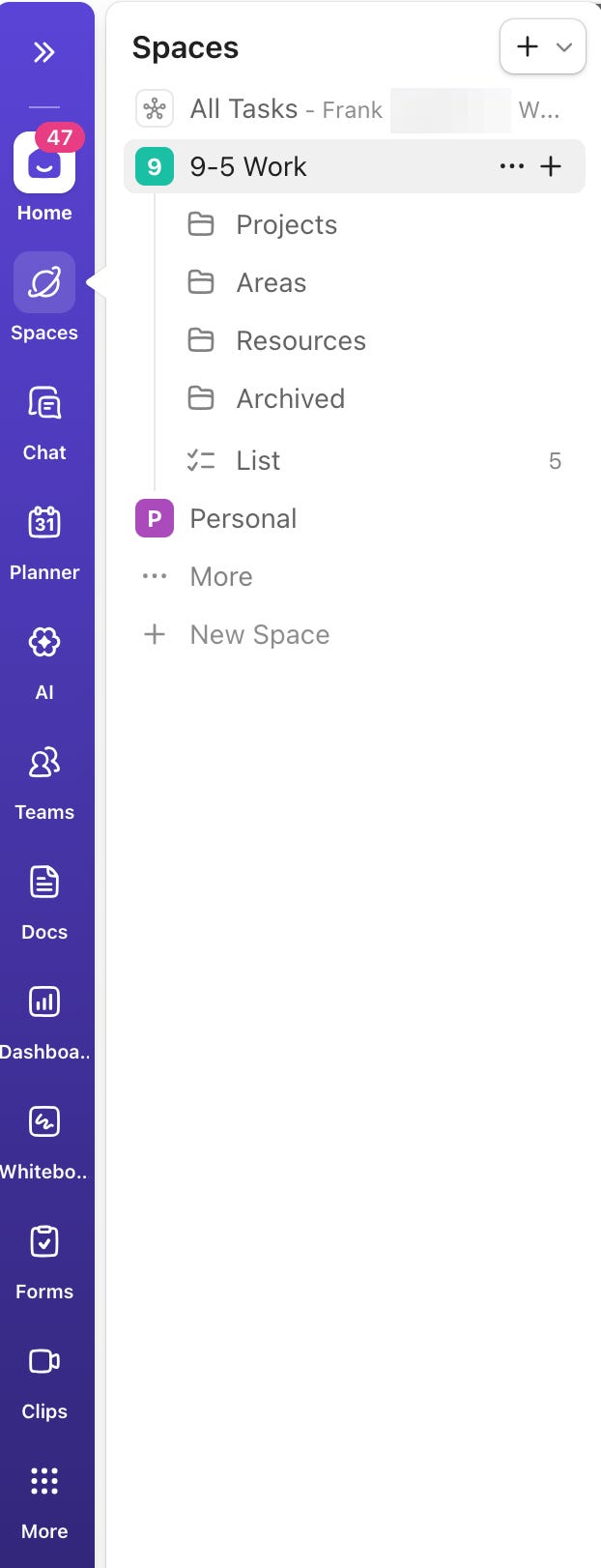
I have 2 workspaces: 9-5 work and Personal.
Create a workspace and name it - Personal.
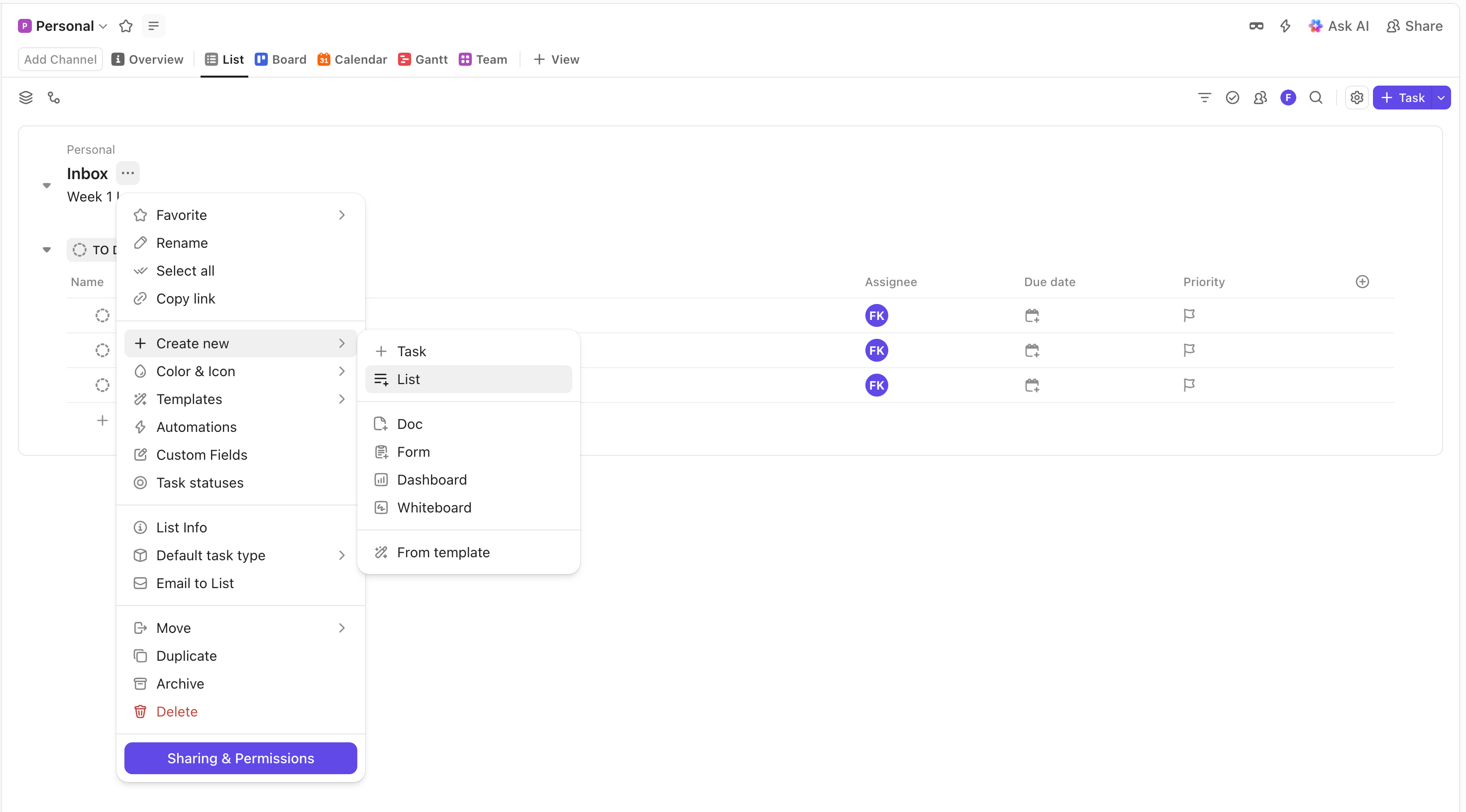
Create a new list - Inbox.
It will contain lists of all ideas you want to write about say in a month. Aim to ship one ideas per week and 4 per month as you start.
#Step 2
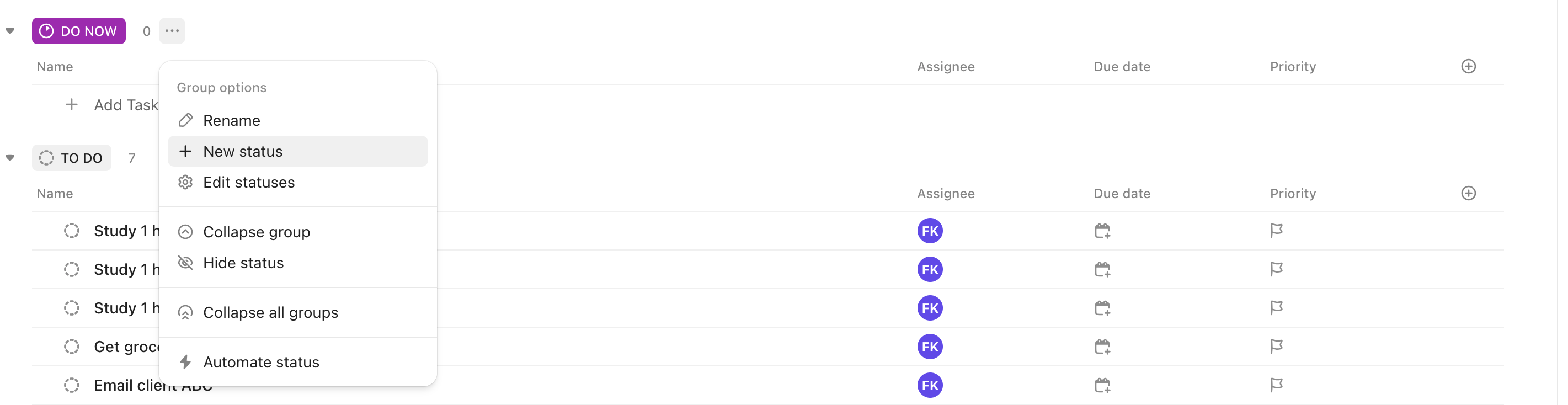
Create new statuses in the Inbox list.
Inbox - for raw ideas you capture as you go
Drafting - for pieces you are working on
Editing - for complete pieces you are editing
Published - for final published pieces
#Step 3
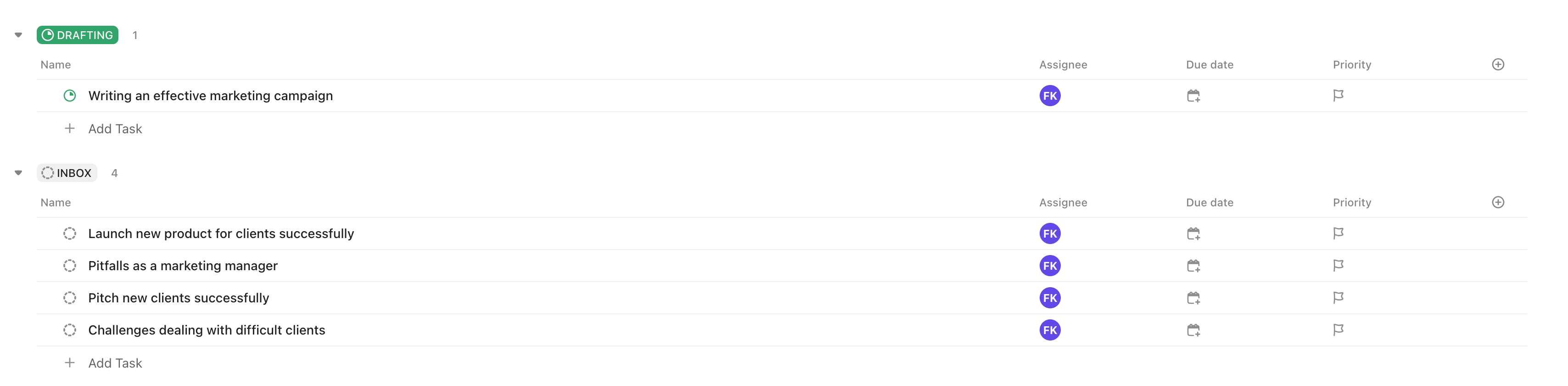
In your Personal workspace, create all ideas you want to write about.
The assumption is that you work in Marketing.
Here are some ideas to write about.
#Step 4
View your ideas in board view.
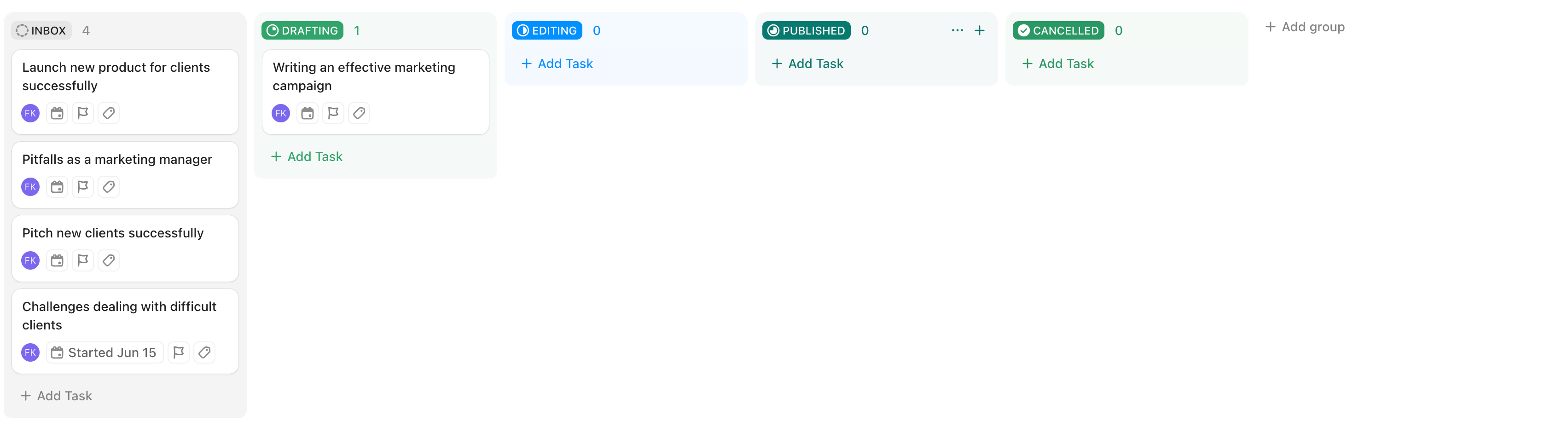
This way, you can see what ideas you have and their progress along the publishing pipeline.
#Step 5
Use an automation whenever a task moves from “Inbox” to “Drafting”
This automation applies a Document template that allows you to write right in Clickup.
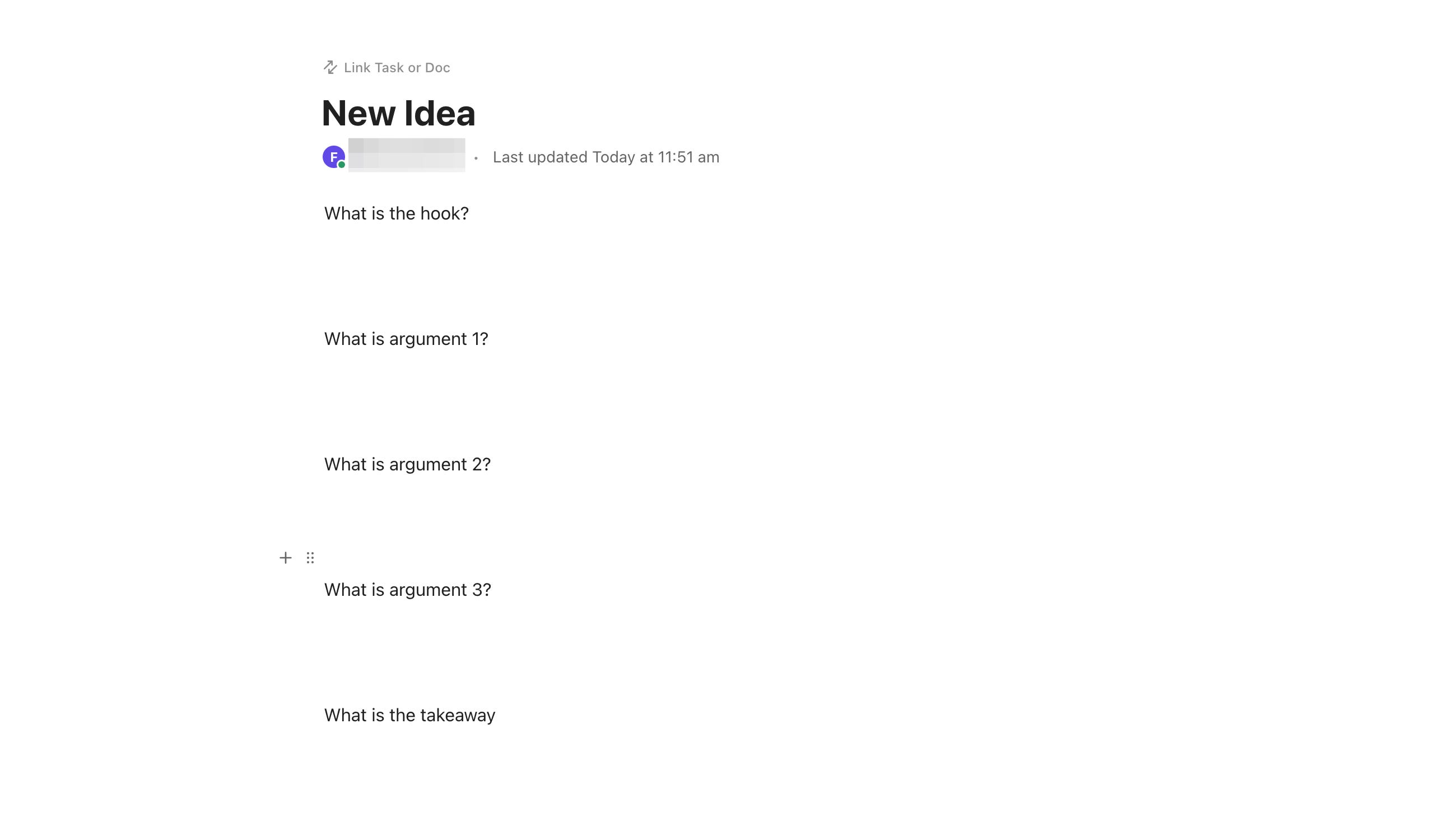
First, we create a document template with prompts that we can be using.
For example
Hook
3 core arguments
Key takeaway
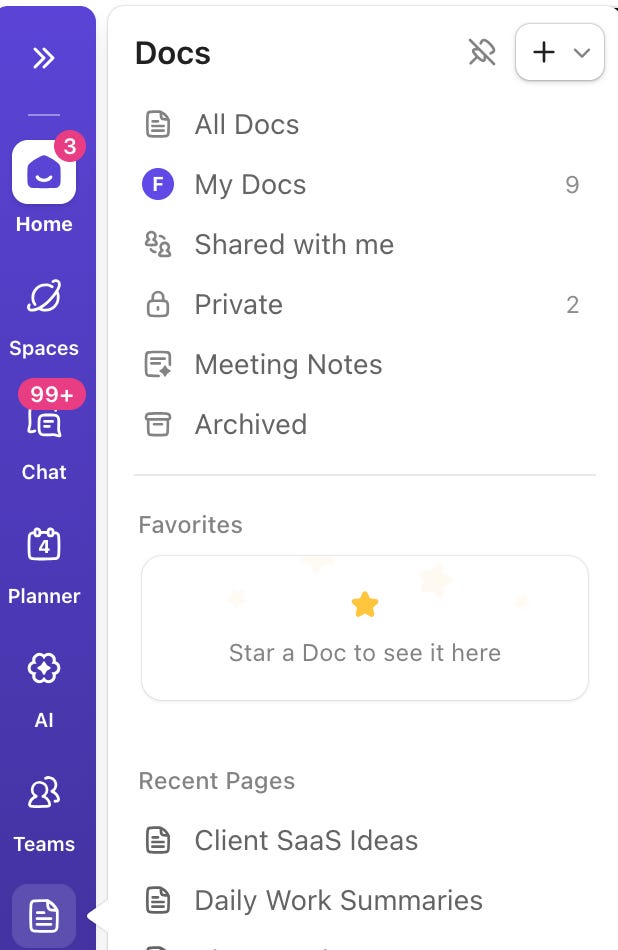
Click the docs menu and create a new document.
Add the three prompts.
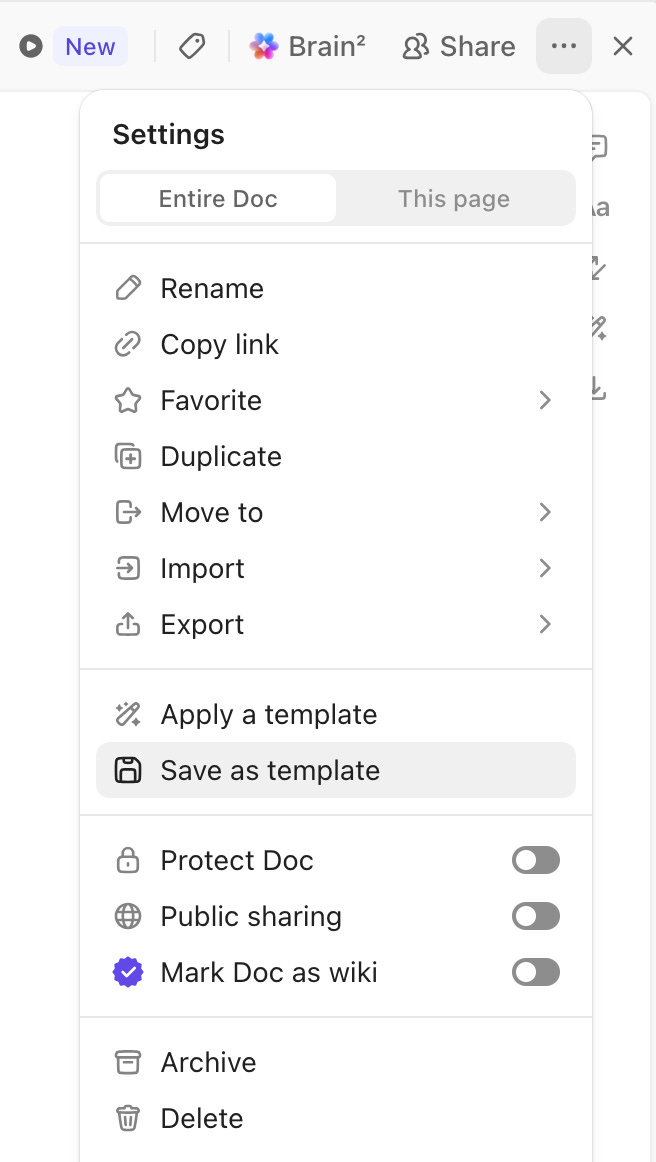
Save this as a template by clicking the 3 dots at the right hand corner.
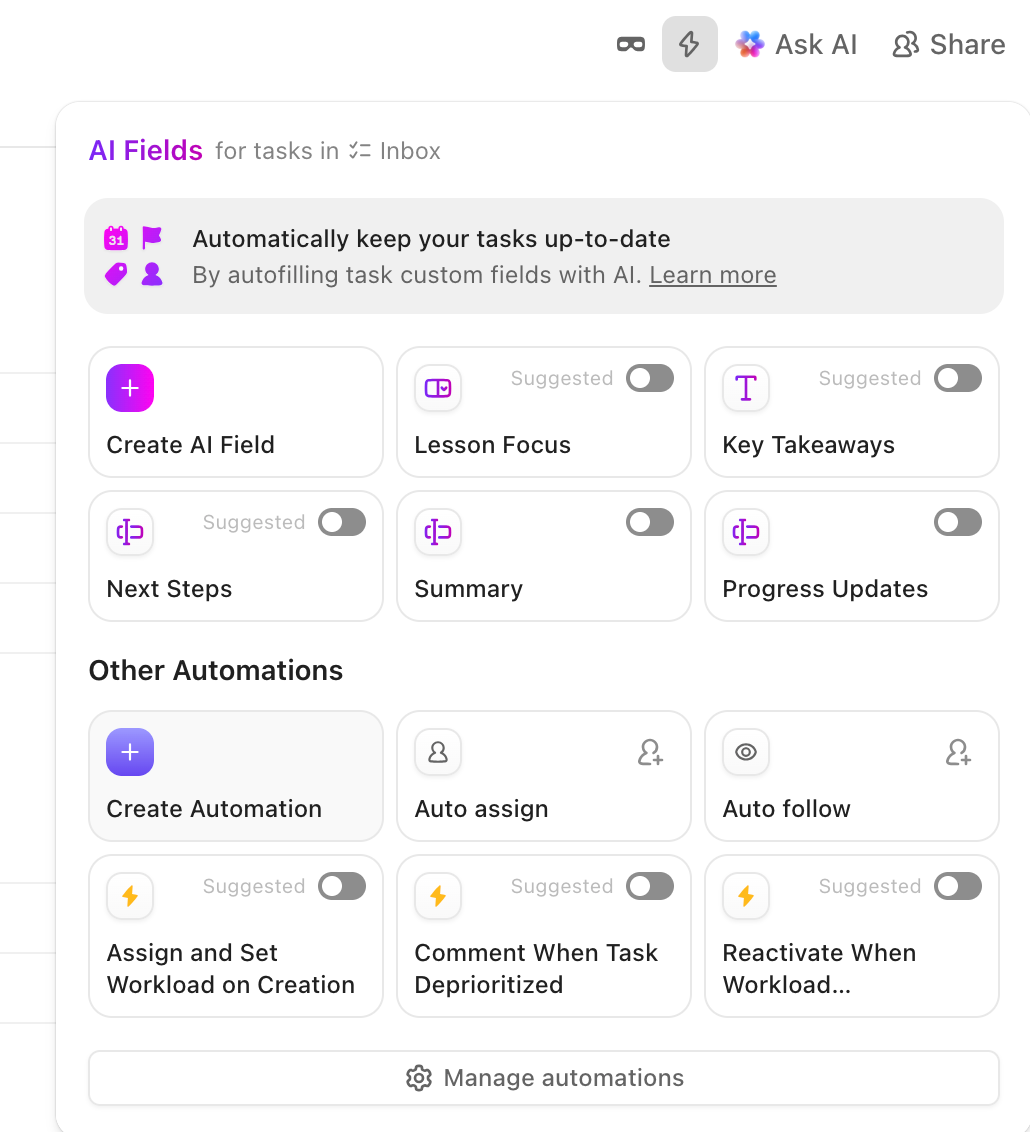
Now, click the lightning icon at the top right corner and select “create automation.”
We want the trigger to be “status change” for any action.
When status changes from “Inbox” to “Drafting”, we want this template to be applied and we can continue writing.
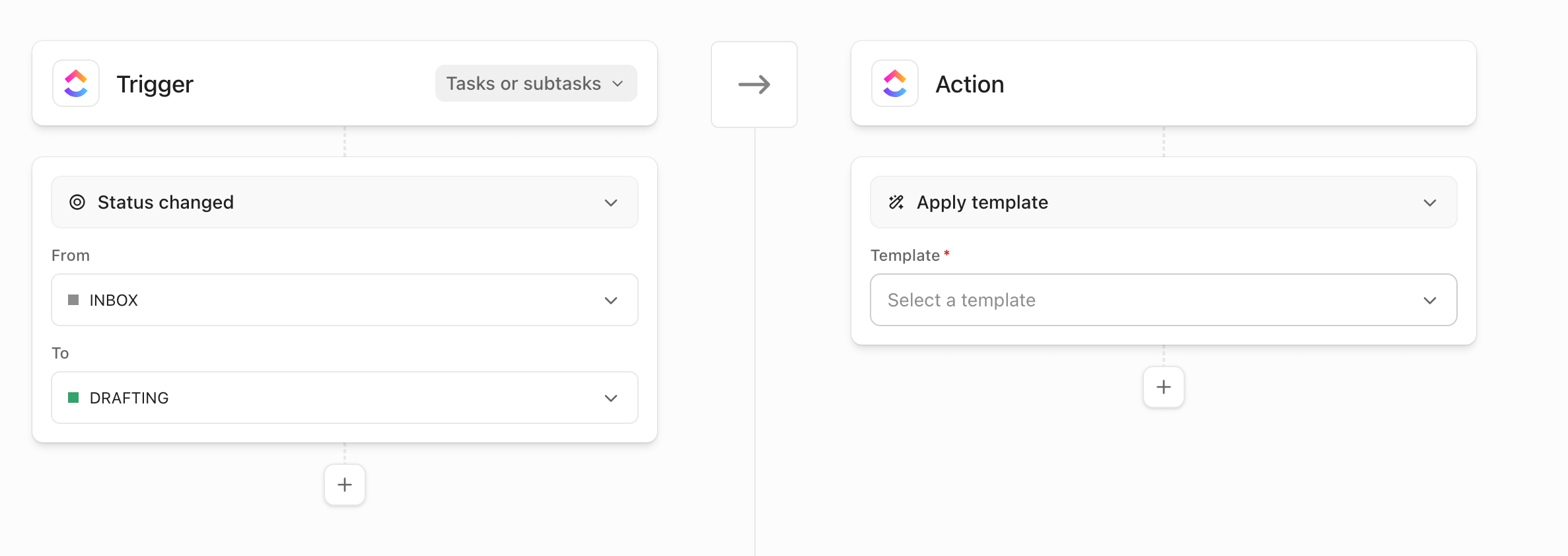
Select the template you just saved.
This way, you will begin writing immediately in Clickup for the 30 minutes you set every day.
It is easy to get started with ClickUp, sign up free here.
To help you keep your goals in check, adopt a journaling system which helps you:
Give yourself permission to think before decision-making.
Embrace pausing and giving attention to matters before deciding.
Embrace habitual reflection to understand how your emotions affect you.
In my case, I enhance emotional awareness and practice habitual time for thinking by adopting a mindful journal system.
Here’s exactly how.
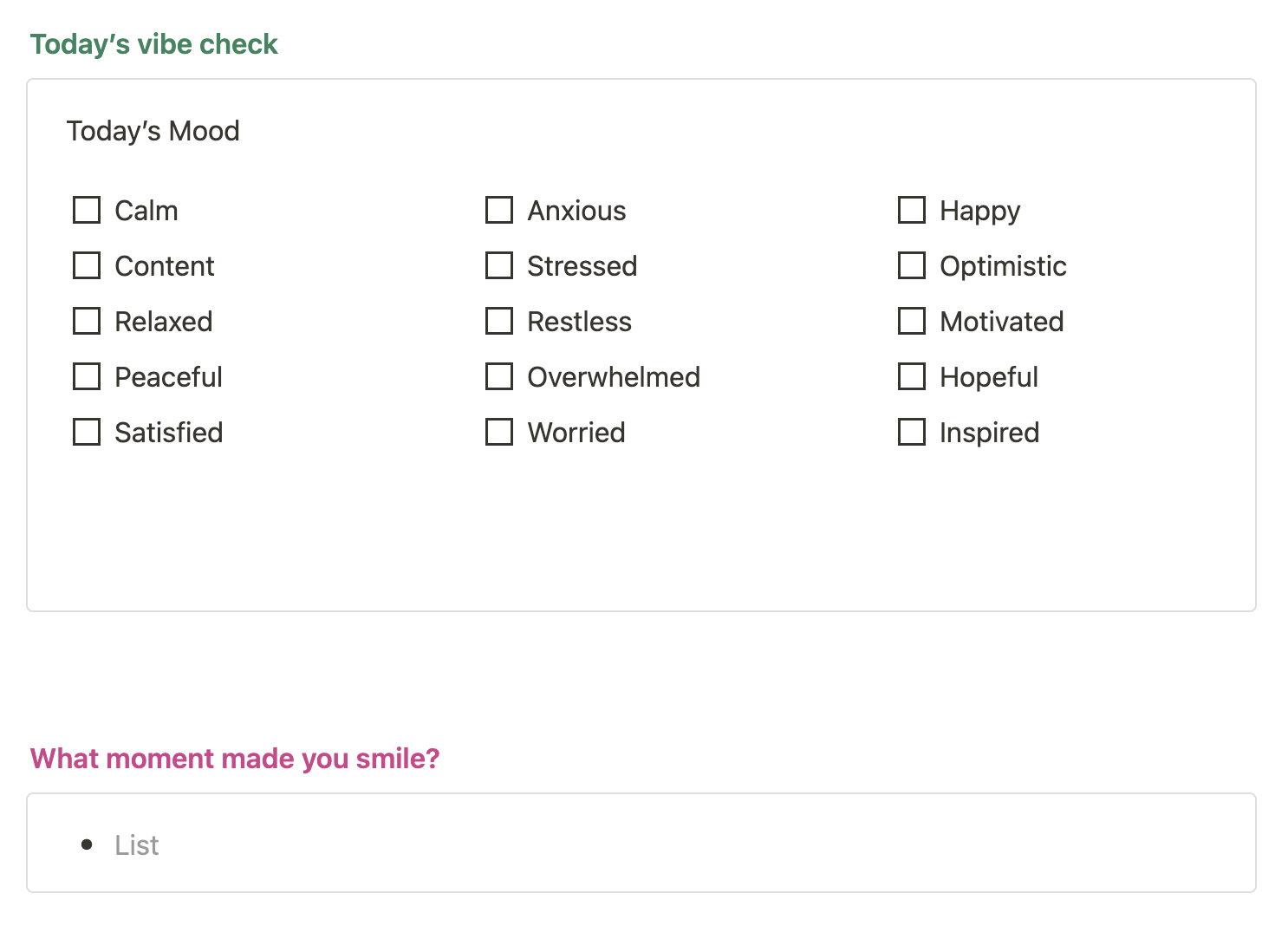
#1 The first step is creating a new journal entry.

#2 I track my mood and moments that made me smile.
The second step is to highlight how I am feeling. what is my current mood? What made me smile?
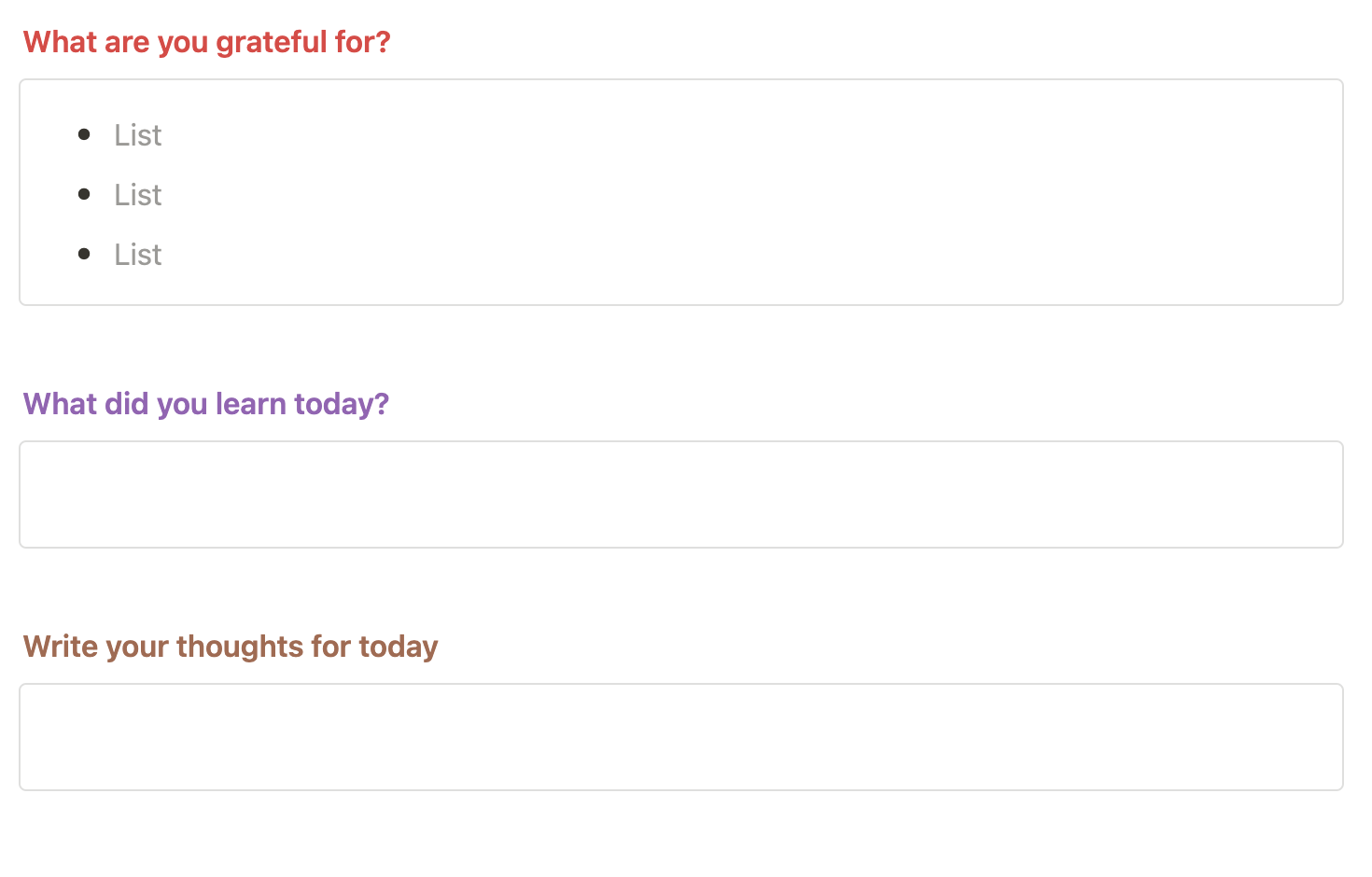
#3 I note what I am grateful for, my lesson for the day, and thoughts.
The third step is listing 3 things I am grateful for and my lesson for the day, which can be anything from the breakfast table to the workplace.
I also write broad thoughts for the day. Whatever is on my mind.
It also includes weekly reflection on Sundays to really see how my week has been.
I rely on prompts so that I don’t have to stare at the blank screen for too long.
It captures so many broad aspects:
What was the most meaningful moment of the week.
What challenge did I face and how did I handle it?
A lesson learned this week.
How this week’s lesson is helping my life.
My intentions for the next week.
The system also has 20 Think Day prompts for deeper reflection. You will be more aware of your emotions daily and reflect weekly on what you need to improve on.
The think day prompts also help you reconfigure your life to assess where you are heading.
Try it in your own life here.
Coming Up Next Week: Dilemma in Using Social Media
We look at a case study where a subscriber faces a dilemma because Social media has a negative impact on them yet they need it for work.
That’s it for now.
Watch out for next week’s Q&A session in your inbox.
As always, fresh ideas are welcome. Please feel free to send in your feedback, thoughts, questions, and suggestions—I read them all!
If you want to pass this newsletter on to a friend, here’s a link to make it easier.
Catch you again soon.
Have a great day :)