
Weekend Q&A Sessions: Creative Friction
When there's too much friction in handling work logistics


Focus, meditate, sleep, and even relax better using Brain.fm here for 1 month free.
Welcome to this week’s Q&A session.
We are excited to have you in our community.
On the weekends, we dedicate a post to help you overcome your personal productivity problems.
Here’s how it works
Simply describe what’s affecting your productivity in this form.
(No emails or personal details asked).
We keep it anonymous so that the focus is only the productivity problem.
Every weekend, we select one response and dedicate a post on how to solve the problem all free.
The Productivity Problem
This weekend we look at creative friction that emerges when we try to make progress in unrelated projects simultaneously.
A subscriber wrote in:
I took on affiliate marketing while building up my realtor business to gain a better understanding of marketing and get another form of income in the process I started making multiple brands across 9 channels I've recently got out most I'm down to 2 real estate and 1 passion project that needs direction but is getting there, planning content to stay in front of people while handling my day to day is becoming a chore almost and while juggling brands I struggle with momentum and consistency.
If we zoom out, the scenario points to the problem of friction, which is the resistance between intention and execution.
The subscriber experiences creative friction as they try to juggle multiple brands (real estate and a passion project).
The problem here is treating the two as separate mental siloes and paying a cognitive tax each time they switch between them.
This is the reason they feel that daily tasks are a chore and struggle with momentum and consistency.
The Mindset to Solve Creative Friction
The first place we start is by changing our mindset related to how we can overcome friction and make good habits automatic.
In his book, Field Theory in Social Science, Kurt Lewin introduces the idea that behavior is the result of the balance between two opposing forces.
Driving force - motivation, incentives, willpower to undertake the behavior
Restraining force (friction) - fears, psychological barriers, environmental obstacles preventing movement
What Lewin observed was that we were more likely to engage in a desired behavior when we reduced the friction rather than when we increased the driving forces.
For example, if you wanted to keep fit, say by going to the gym daily, you would have these two opposing forces:
Driving forces - the desire to have a fit body “I love how my friend’s body looks like”, your willpower “I can do this.”
Restraining forces (friction) - fear, you can’t find your gym shoes, you forgot to prepare your gym clothes.
Kurt’s argument was that you could easily engage in keeping fit if you focused on reducing friction such as preparing your gym clothes the night before rather than adding to your driving forces such as desiring a fit body.
"If one attempts to change the level by increasing the driving forces... the tension in the system will increase. This leads to high resistance and high emotionality... it is often more efficient to achieve change by reducing the restraining forces rather than by increasing the driving forces."
This is the strategy we consider if we want to reduce creative friction.
Our subscriber needs to reduce context switching through the rule of one.
What’s that?
Treating the two brands as one when creating content and using overlapping themes between them. Rather than create different content for real estate and your passion project, reduce the friction by using overarching themes and creating variations from it for the different projects.
If you study any big creators across multiple platforms, you will observe that most have the same content cross-posted.
What you found on X (Twitter) is what you see on Substack and LinkedIn.
However, as the two brands are separate, have one theme e.g., “Lifestyle” and create variations for the two projects.
This way, you won’t feel as if you are paying a high switching tax and losing your momentum in the process.
The second mindset that is also commonly adopted by content creators is batch processing where they plan all their content once such as on a Sunday evening.
Throughout the week, they only tweak what they have for the day and post it. We see this with founders such as Jack Dorsey who used themed days when at Twitter.
"All my days are themed. Monday is management. Tuesday is product. Wednesday is marketing and communications. Thursday is developers and partnerships. Friday is company culture. Saturday is off, Sunday is strategy."
Finally, the subscriber mentions that they feel that their passion project “needs direction.” The cure for this is to bridge your real estate expertise to your personal identity.
This way, you will stop looking for the direction in a vacuum and align the two in a category of One as Dan Sullivan tells us.
"Your Unique Ability is the set of natural talents that you’ve been using since you were a child. It is the thing you do better than almost anyone else, and it gives you energy. When you align your identity with this ability, you stop competing and start creating a category of one."
Are You Missing Out on the Power of Agents?
AI is transforming the world of work and how we actually get things done today.
In 2022-2023, prompting was how you got the best from AI. As an architect, you told AI exactly what to do to give you your desired outcome.
In 2024-2025, automation became central stage as AI could be handed the tools and could search for answers on Google and give them back to us.
Today, this has changed to AI agents. You only need to give an agent a high level objective (e.g., "Research the UK construction industry's shift to electric plants and write a 2,000-word summary") and it will create its own "to-do list," executes it, fact-checks itself, and only returns when the job is done.
Why I love AI agents is that they do not replace my cognitive abilities such as critical thinking which I need to preserve.
Instead, they handle the heavy lifting of cross-searching 10 browser tabs, refine the solution and self-correct before giving me the final output I need to work on.
AI agents reduce procedural friction as the handle tasks that took me hours to complete before.
For example, if you wanted to write a new Kindle book to earn extra income on the side, you could ask an AI agent to research on the latest books and identify the gaps you could fill.
I use HyperAgent which is giving you $1000 free credits to try it out. Just fill the form about how you will use it and your account is setup.
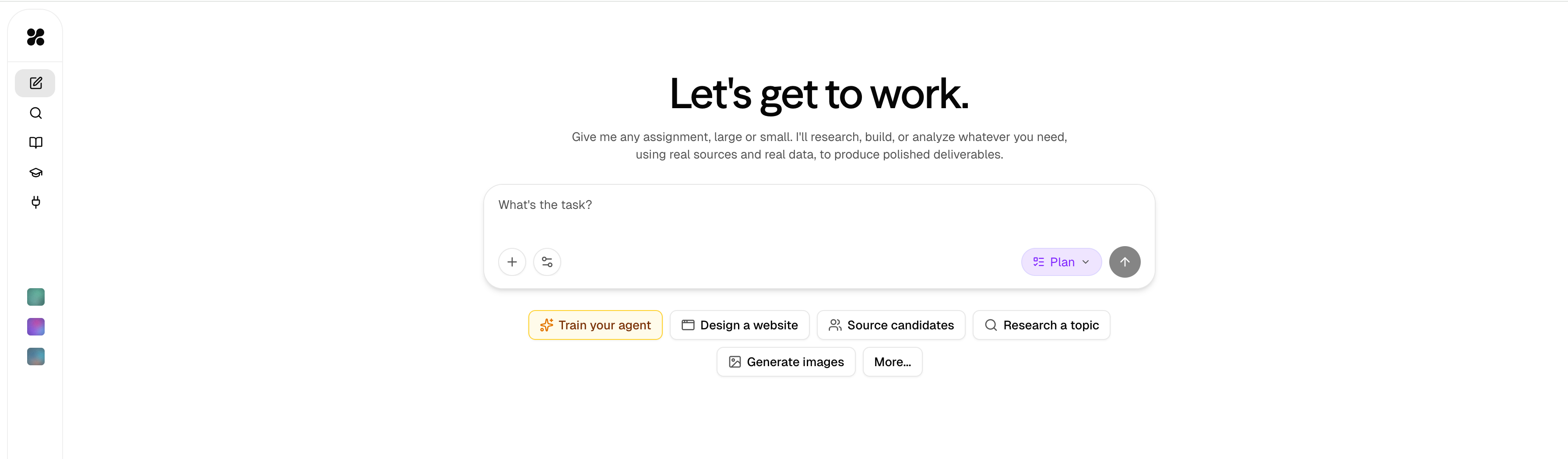
#Step 1
This is the first screen you see once you are setup.
#Step 2
Type the objective that you would like the AI agent to accomplish for you.
I asked it:
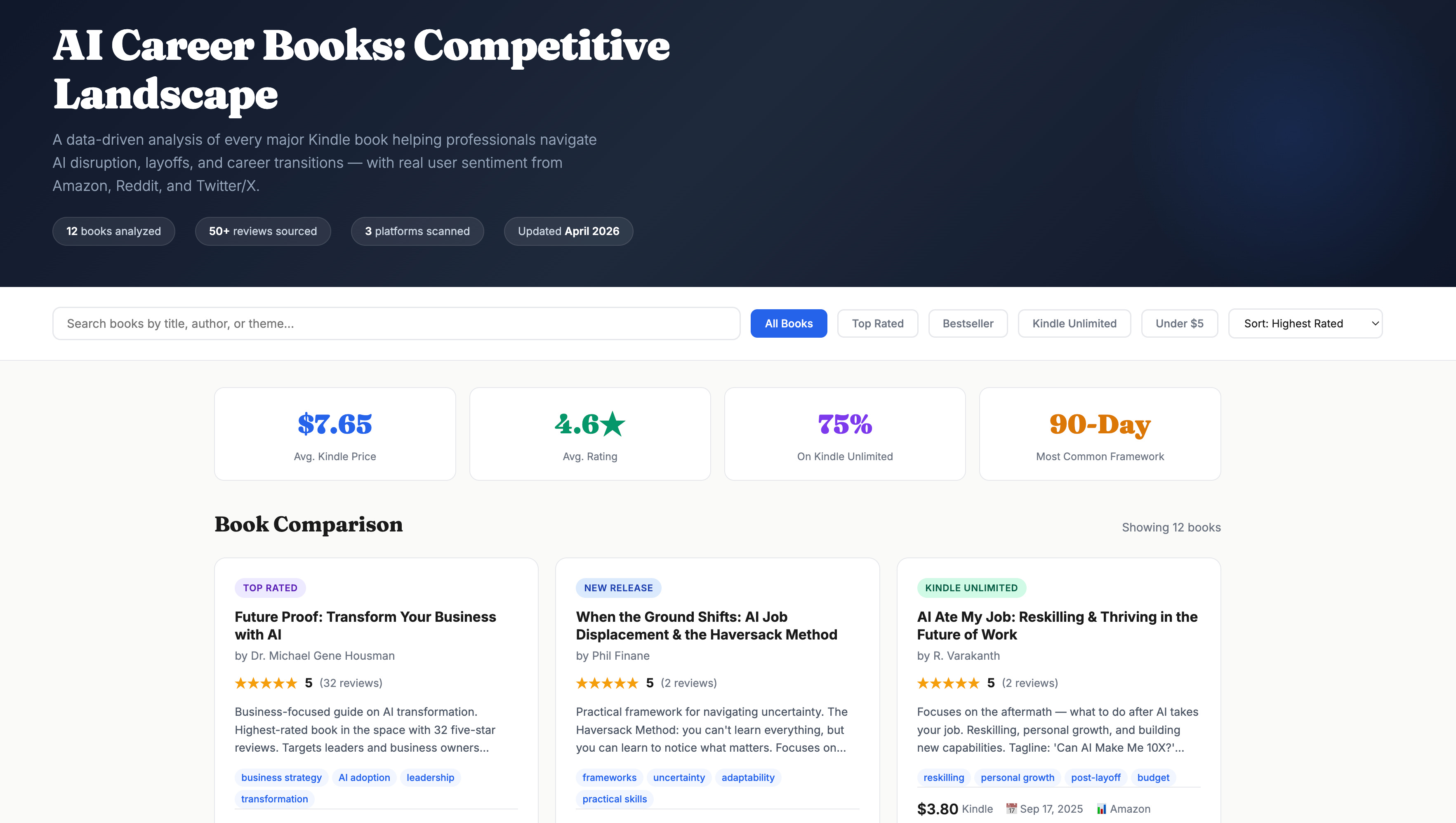
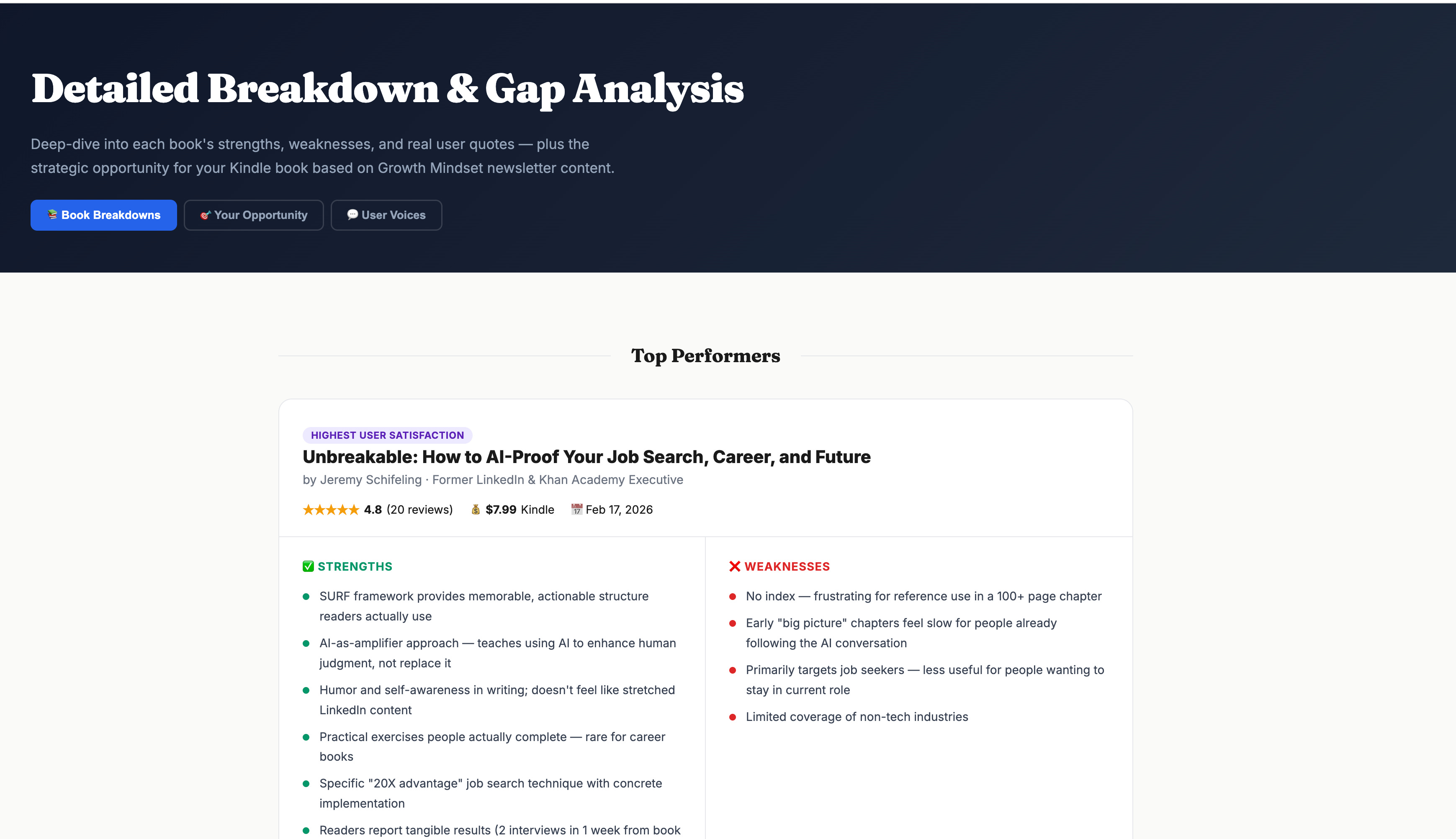
“Research the competitive landscape for amazon kindle books relating to adopting AI and navigating changes from layoffs. Find every what real users are saying on Twitter and Reddit. Look at Amazon and see views from users. Build me an interactive comparison webpage of best performing books and a detailed breakdown page with pros, cons, and real user quotes. find the gap I should fill with a new kindle book”
#Step 3
The AI agent went to work and gave me a webpage with real results.
There are so many use cases you can also try out in your own work including designing websites, launching podcasts etc.
Here’s $1000 free credits you can use to leverage AI as a tool that enhances your work practices.
Coming Up Next Week: Operational Friction
We look at a case study where a subscriber uses multiple tools, including Zanda, Microsoft Outlook, Teams, and Google calendar but keep falling behind.
That’s it for now.
Watch out for next week’s Q&A session in your inbox.
As always, fresh ideas are welcome. Please feel free to send in your feedback, thoughts, questions, and suggestions—I read them all!
If you want to pass this newsletter on to a friend, here’s a link to make it easier.
Catch you again soon.
Have a great day :)