
There was no ROI
For some, the technology did not improve their productive lives

You’ve got the skills and ideas but no revenue? Learn how to create an online business from scratch here. Only 10 spots remaining in this masterclass.
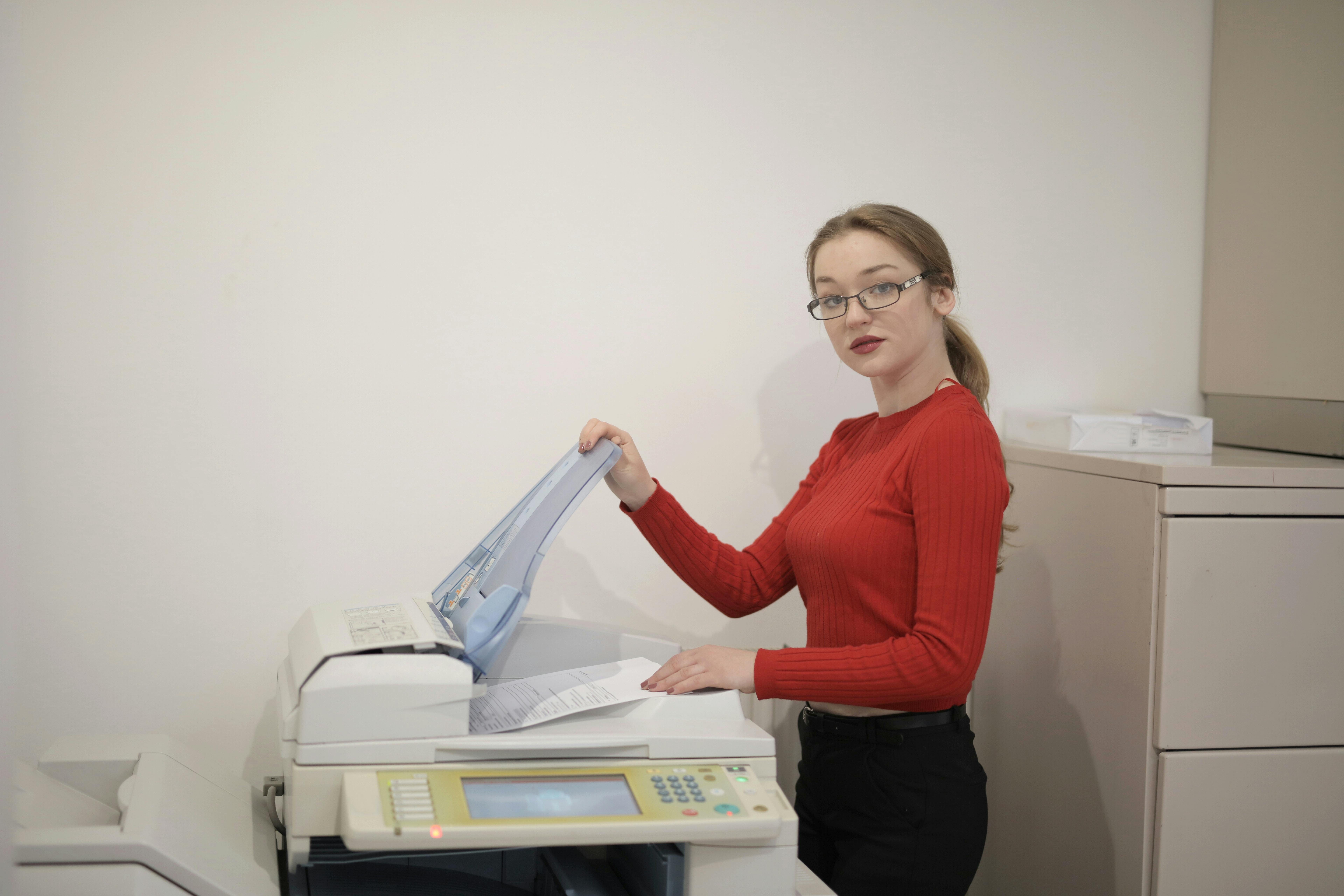
Back in the 1950s, carbon copying was how you got a few copies of an original document.
You placed the original sheet face up, sandwiched a carbon paper face down, and placed a copy sheet beneath it.
Anything you typed or wrote on the original sheet was transferred to the copy sheet beneath. It was a slow and laborious method.
Then, in 1959, the Xerox 914 copier was introduced that reduced this ardous method to a simple touch of a button.
You now placed your document under a tray and hit “copy”, releasing as many duplicates as you wanted.
In one of the Xerox 914 ads, a young girl was able to copy a document by pressing a button and in another ad, a trained chimpanzee did the same. The ads screamed that it was so easy to make copies.
The technological intellectual innovation meant that now, duplication was frictionless.
Rather than spend hours using carbon paper to generate only a few copies, workers would now generate as many copies as they wanted at the touch of a button.
Hidden Costs
However, there were also unprecedented consequences of this intellectual technological innovation.
First, was information overload.
Before, employees attended meetings with only a few copies of the agenda to be discussed. Now, the Xerox copier made it easy for everyone to have their own copy.
Second, was the popularity of the shortcut method.
Workers now preferred using shortcuts (the copier) when generating copies relative to using sheer effort such as taking notes or using carbon copying.
Third, more time was wasted ‘preparing’ to do the work rather than ‘actual working.’
Special copying rooms were setup in offices and employees would wait together chatting as their copies were generated.
The net effect was that there was little ROI as workers were spending more time creating copies rather than being on their desks working.
They were also now overloaded with more information than they could process.
Marshall McLuhan criticized the Xerox copier, arguing that it undermined the very intelligence that it was meant to serve.
"Xerox makes the individual a publisher... it has provided a means of total documentation that has yet to be understood. The typewriter was the first stage of this revolution, but Xerox has brought it to a peak where the sheer volume of material threatens to bury the very intelligence it was meant to serve."
One way it did this was the “photocopy effect” where students or researchers felt that because they had a physical copy of the text in their briefcase, they had somehow acquired the knowledge within it.
For organizations that adopted the copier machines blindly, without aligning their work practices to the new technology, they did not generate any return on their investments (ROI).
"The machine made us lazy. It was easier to copy a 50-page technical manual than to write a one-page summary.” A manager said in an internal memo.
However, some managers noticed the misalignment of their work practices to the copier machine and made appropriate adjustments rapidly.
An anonymous operations manager would state that they now adopted a culture of distributing documents to their need.
"We had to move from a culture of 'distribute to all' to 'distribute to need.' I instructed my department heads that the Xerox machine was no longer a self-service utility for every whim. We appointed a 'Copy Coordinator'—a gatekeeper. If you wanted more than five copies of a document, you had to justify the strategic relevance of the recipients. Our paper costs dropped 30%, but more importantly, our managers started reading their mail again."
At the extreme, some managers adopted a cost-per-copy method where each copy generated cost money to the company.
Fast forward to 2026 in the age of Generative AI.
In many ways, Generative AI is similar to the Xerox 914 copier.
Just as employees would generate copies at the touch of a button, it only takes a few prompts to generate a 50-page report or a full website.
Just as workers would create complete copies of original manuscripts without reading them, today, you can also generate summaries of entire articles and books without reading a single page.
Students and workers are also likely to use the shortcut of using AI to produce summaries for them without engaging in any intense study.
You may also spend so much time perfecting prompting and get little done just as the workers chatted at the copy office as they prepared to work.
These are some of the ways we risk losing the ROI on AI tools if we fail to update our work practices to align with the new technology.
In neuroscience, the concept of deliberate difficulty indicates that when information is too easy to acquire, the brain treats it as disposable.
To trigger the growth of new synaptic connections (neuroplasticity), the learner must engage in active retrieval and synthesis. This 'productive struggle' is what signals the hippocampus that the information is worth the metabolic cost of long-term storage.
Retaining Productive Struggle in the Age of AI
This week, our topic is how we can achieve cognitive ROI in the age of Generative AI.
To do so, we need to set up guardrails and protected spaces where we can continue engaging in activities that depend on our productive friction.
Just as the 1960s manager appointed a copy coordinator to gatekeep the mundane copying, the modern knowledge worker must also appoint an ‘administrative agent.’
What I have observed to work well is differentiating tasks that require AI assistance from those that can be done purely by AI.
In my case, I give myself time to create the first draft un-augmented by AI tools to force my brain to engage in productive struggle.
As I deliberately struggle, I understand the concepts better.
Thereafter, I embrace the AI tools to improve my ideas further.
I then delegate the mundane tasks such as task scheduling, tracking the status of projects, and sending meeting reminders to ClickUp Super Agents.
This way, I get measurable ROI on AI tools as I no longer jump between distractions but have uninterrupted sessions of deep work augmented by the tools.
Here’s how to design your own personal assistant SuperAgent
Begin by designing your uninterrupted work zone. Set aside a few hours when you can engage in deep and critical thinking, unassisted by AI tools.
Next, create a personal assistant Super Agent
Create a free workspace in ClickUp
Click the AI menu in your workspace.
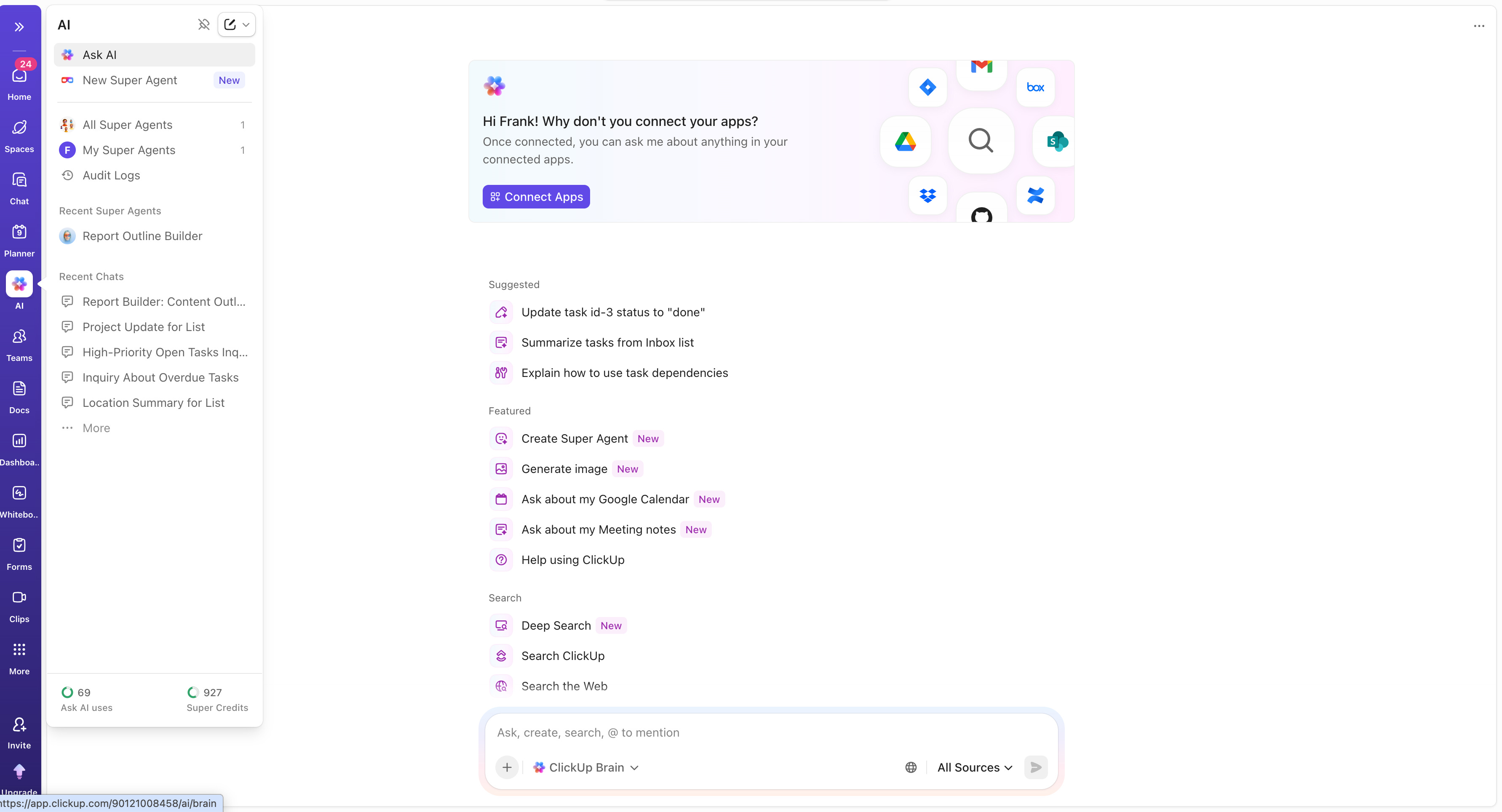
Select “New Super Agent”
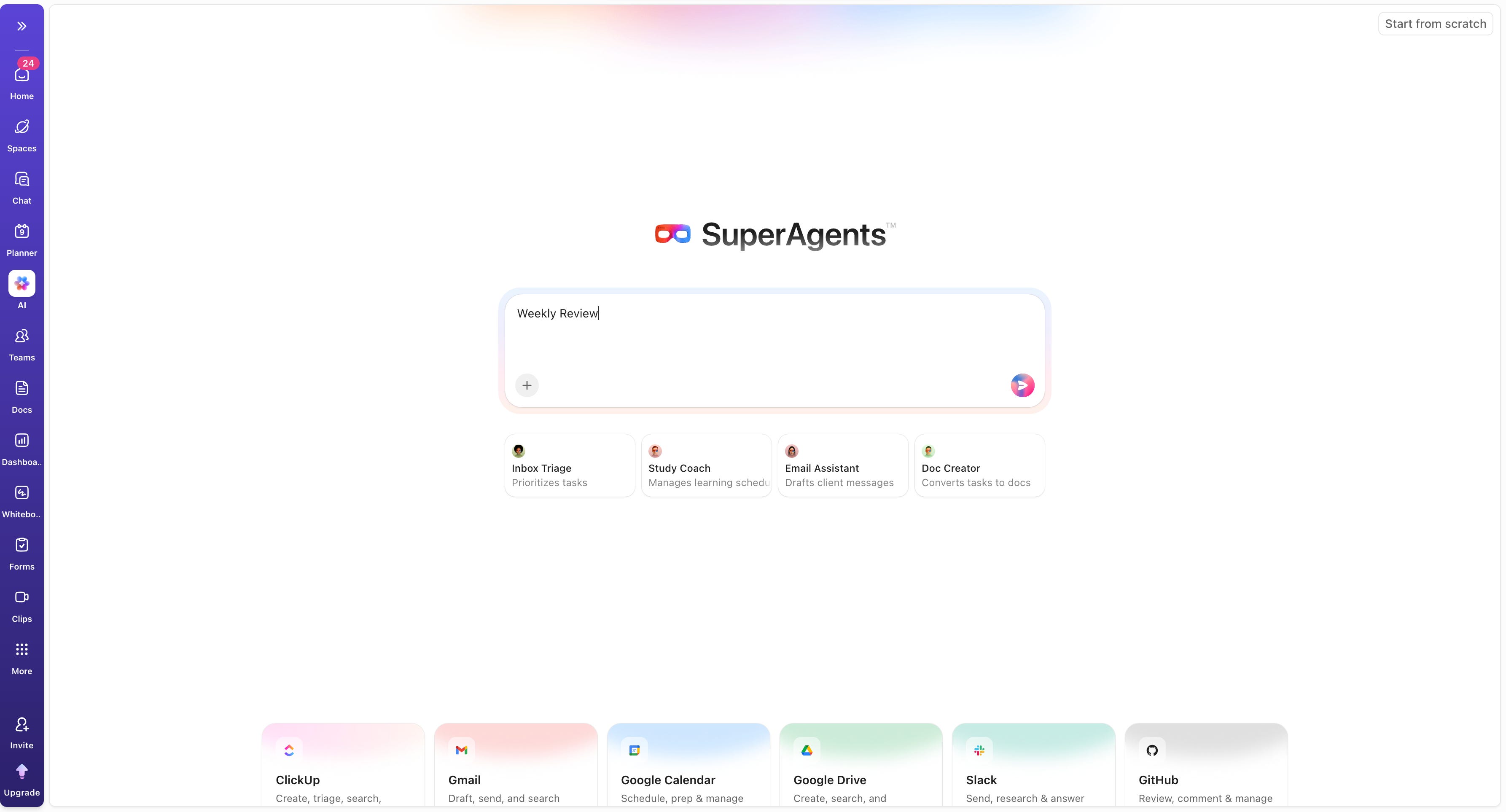
Create a personal productivity assistant super agent.
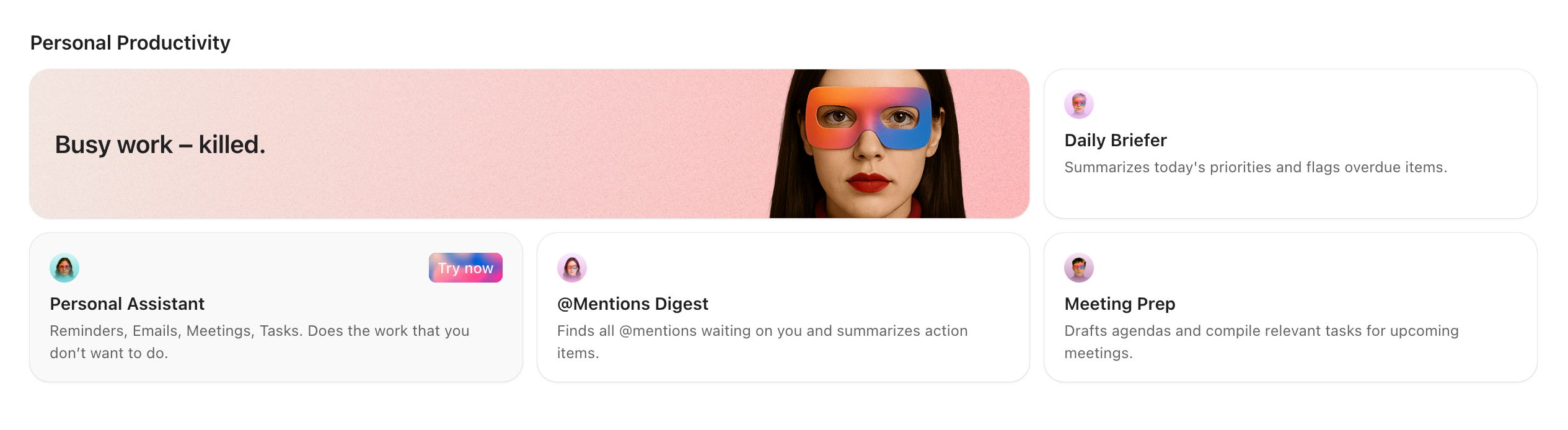
Through a set of responses, customize your agent [try what works best for you]
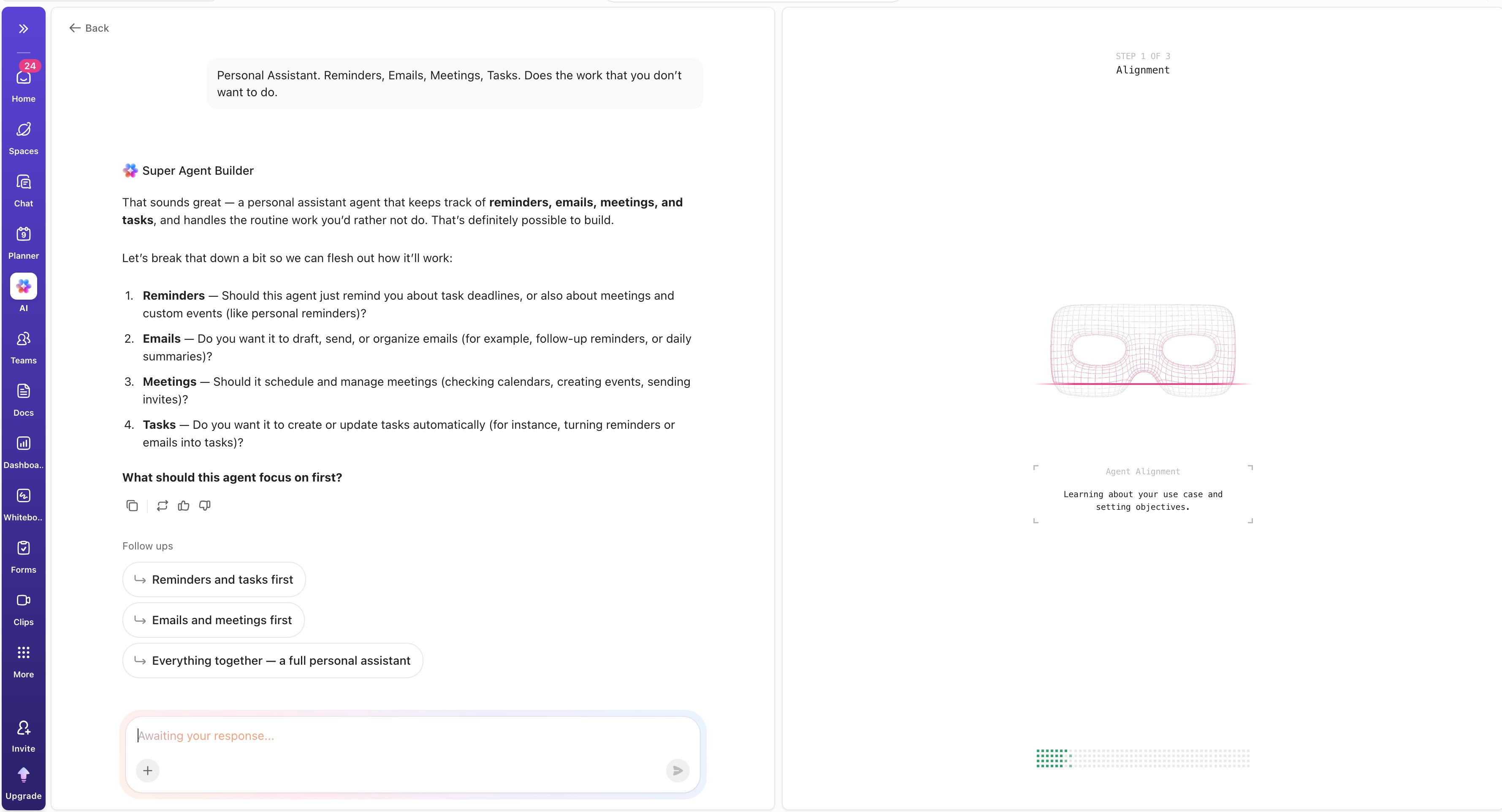
Click a mix of everything for prioritization.
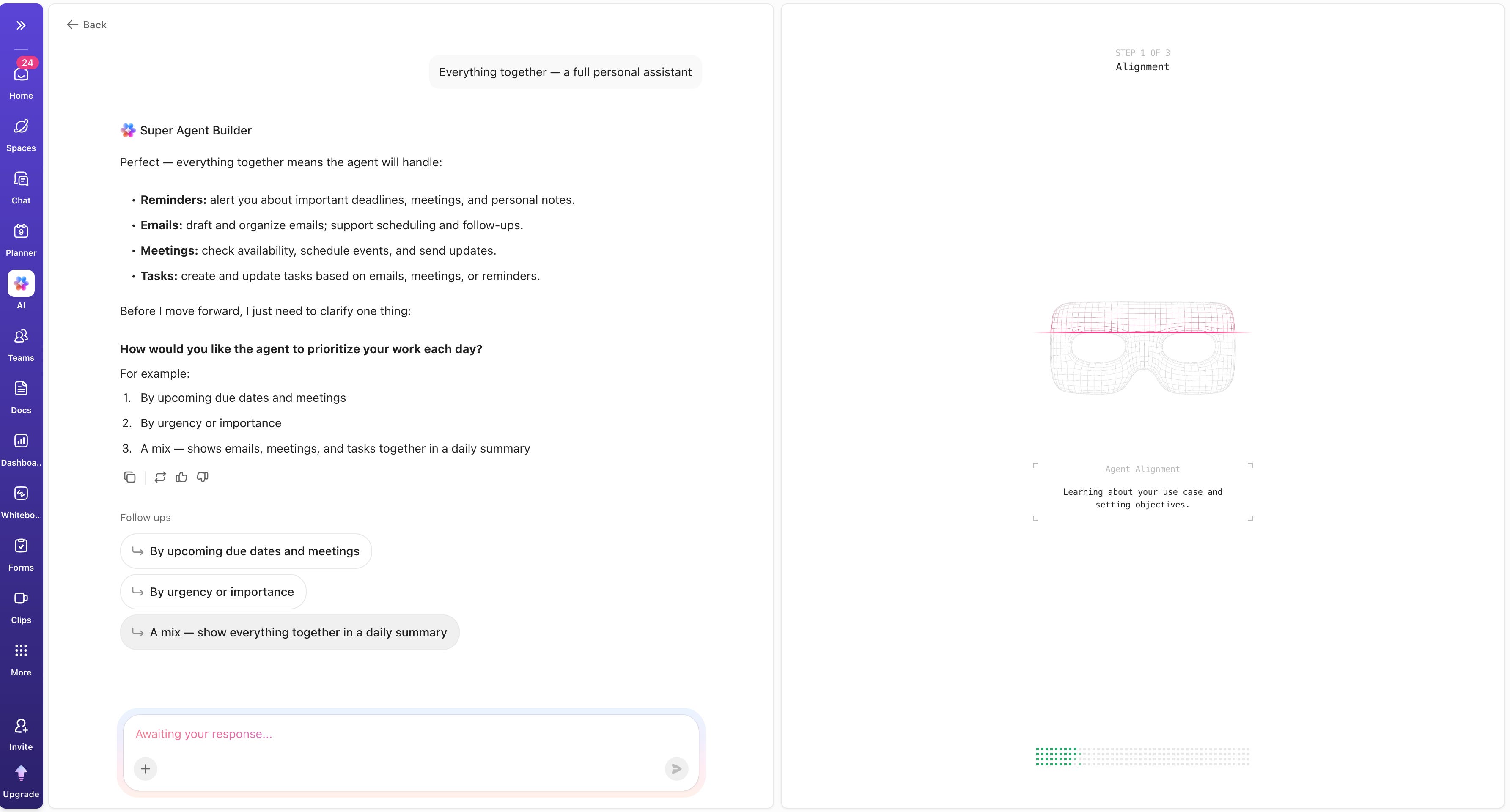
Set how often you want the agent to send you reminders (e.g., every morning at 8am)
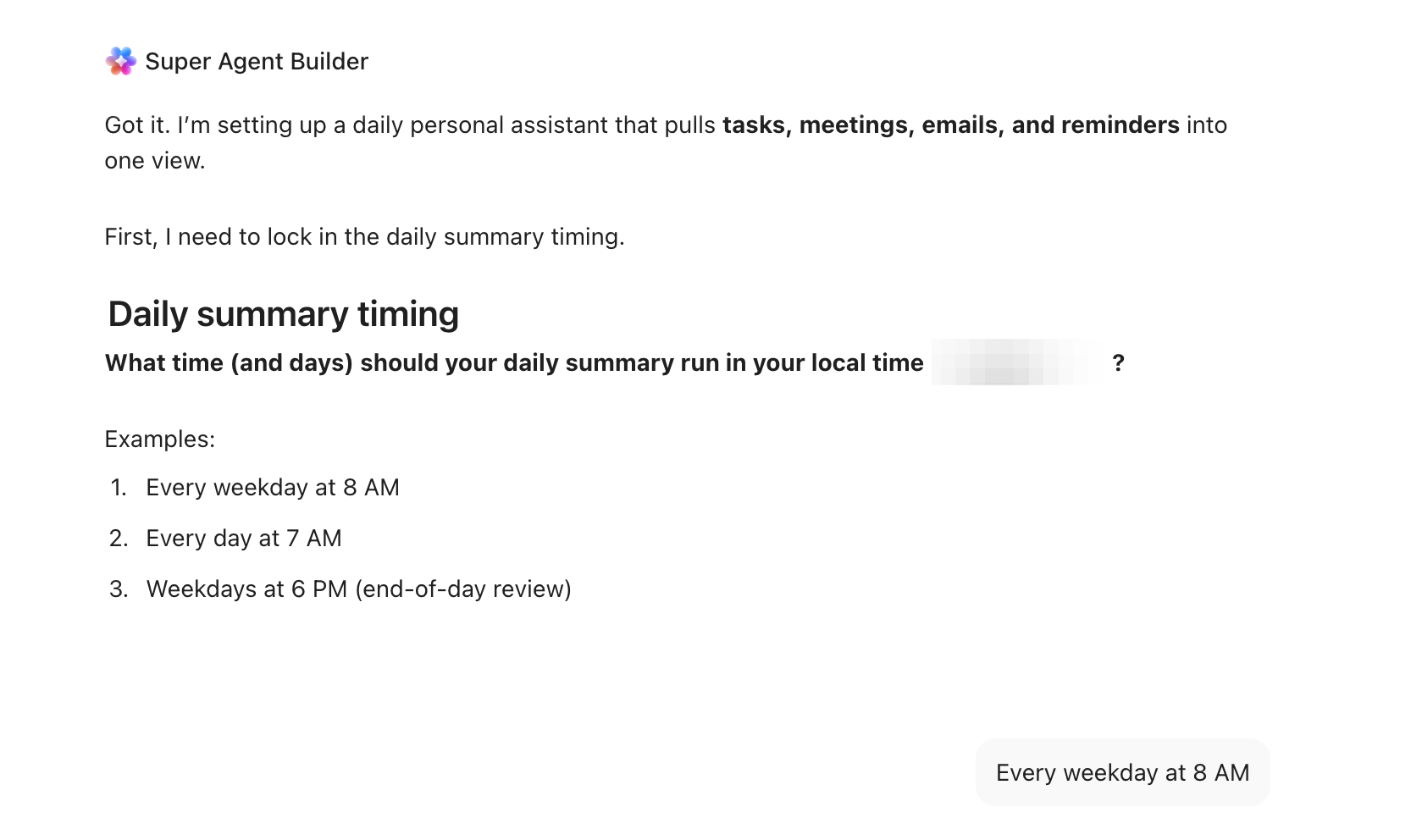
A few more questions are asked such as where to put the summaries, how to email, and where to store the doc.
Answer based on preferences. E.g., I prefer a professional tone when sending summaries and meeting reminders on email.
The ClickUp agent is now live.
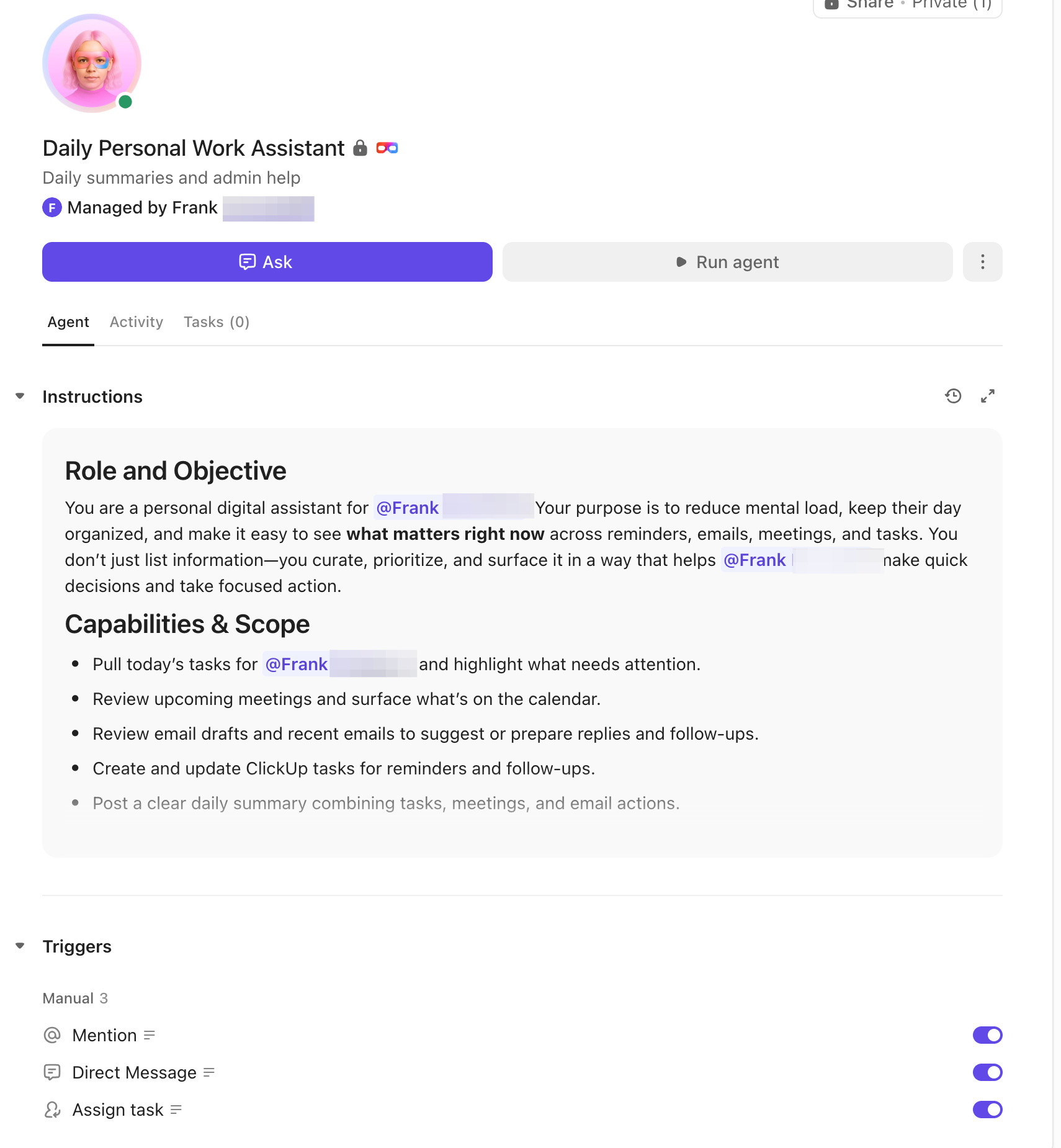
Now, you can run the ClickUp agent and it does the basic tasks for you such as scheduling meetings and keeping reminders of upcoming activities.
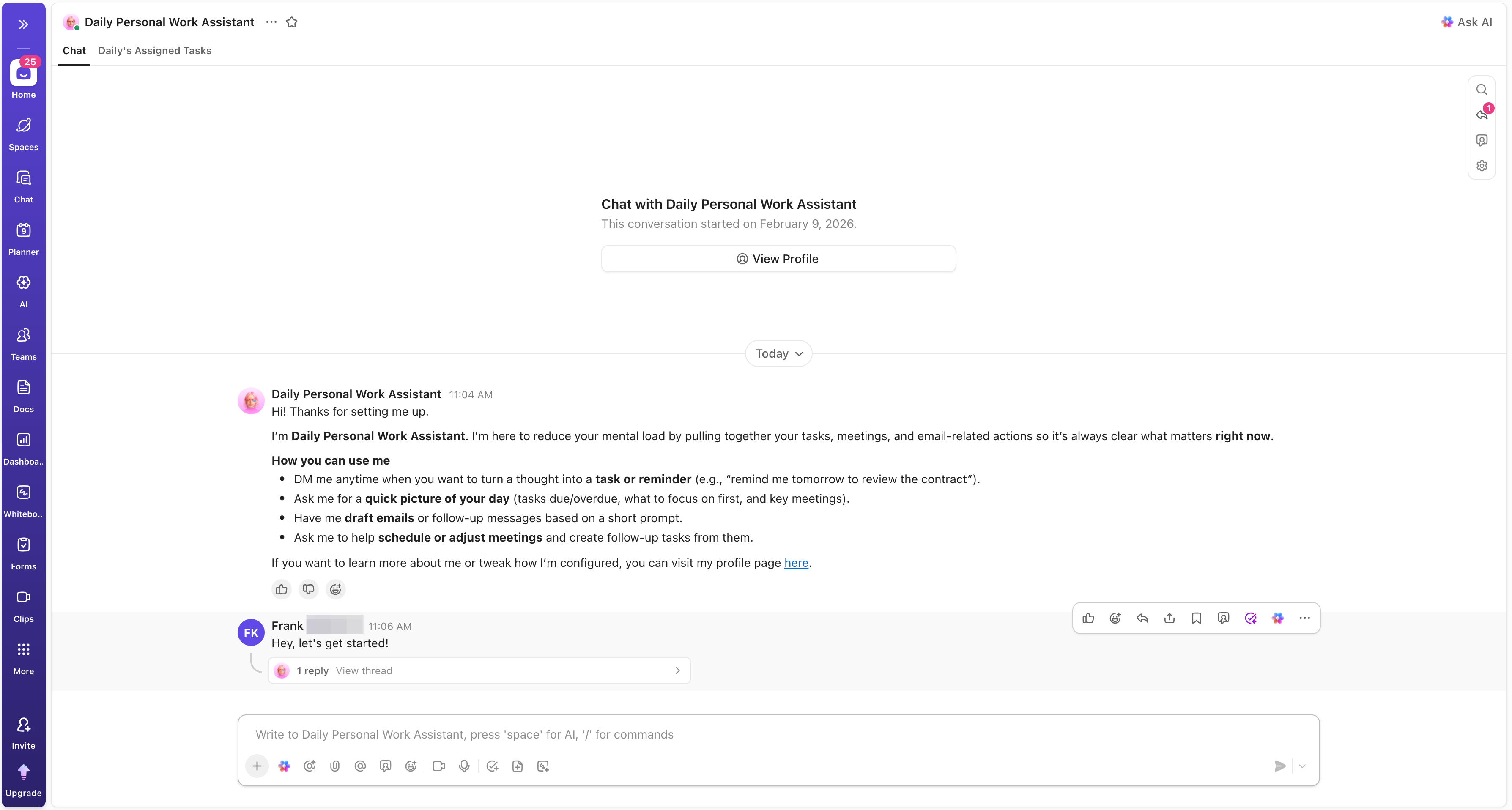
By automating the basics, you can gain ROI from AI while also engaging in deliberate difficulty to learn new things through deep reading and thinking tasks that require productive friction.
This week, take a moment to think about how the Xerox copier became a burden because workers treated it as a shortcut rather than a tool.
If we follow suit with Generative AI, we will become pancake people who are stretched too thin without an understanding of the network of information that we possess.
The true ROI value of Generative AI tools is the internal density we retain when the machines are switched off.
Reflect on this : are you the pilot or the passenger of the AI tools?
That’s it for now.
Watch out for next week’s productivity insights in your inbox.
As always, fresh ideas are welcome. Please feel free to send in your feedback, thoughts, questions, and suggestions—I read them all!
If you want to pass this newsletter on to a friend, here’s a link to make it easier.
Catch you again soon.
Have a great day :)