


Learn to create an action plan to help you achieve your goals free here.
On November 12th 2007, the front page of Forbes Magazine showcased the then CEO of Nokia, Olli-Pekka Kallasvuo holding a flip phone.
The title read: “Nokia, one billion customers – can anyone catch the cell phone king?”
Nokia was king of the cell phone market with a revenue of $71 billion in 2007, representing a 162% growth from $28 billion in 2000. Market share had also grown to nearly 49.4%.
The Financial times would also describe Nokia as “the undisputed king of mobile phones.”
However, from 2007 to 2008, the world turned over its head for the company with the release of Android phones and the iPhone. By 2013, the company had already sold its handset business to Microsoft.
Zooming out briefly reveals an interesting timeline:
2000 - 2007: Nokia grows exponentially
2007 - 2012: Revenue and market share drops as Android and iPhone takeover
2013: Company sells the handset business
Looking at this, we see that 2007 was the year when everything began going south as Android and iOS entered the market.
But what’s even more intriguing, from the company’s history, was its past success in pivoting its business from an industrial conglomerate that made rubber and tires to telecommunications in the 1990s.
Here was a company that knew how to pivot successfully in the past but in 2007, was unable to notice the trends in the market and radically shift to the rising Android OS for its devices.
What was the bottleneck?
The short answer was human friction.
The company had the best talent and access to leading technology but couldn’t pivot fast enough because the internal culture promoted “good news only” while any bad reports were threatened with job loss.
"If you were a software manager and you told the truth—that Symbian was an unmanageable mess and we needed two years to fix the architecture—you weren't viewed as a realist; you were viewed as incompetent. Top managers would shout, 'If you can't do it, I'll find someone who can!' So, people learned to say what the executives wanted to hear."
Engineers, who knew that the operating system was broken, were forced to hide technical bugs and deliver only optimistic reports to middle managers who insulated themselves from the truth.
Teams were also fighting against themselves (MeeGo and Symbian) rather than collaborating to pivot the company to compete against Android and iOS.
It would take a new CEO, Stephen Elop, to declare Symbian an obsolete platform, forcing a shift to Android as the handset business was later resold to Microsoft in 2013.
However, if teams had learned to collaborate rather than fight one another in 2007, the shift to Android would have come much earlier.
If the emotional climate encouraged awkward conversations and examined the truth in the market rather than insulating themselves from it, then a different trajectory would have resulted.
Takeaway This Week
This week, our key idea is that you cannot automate or systemize your way out of human friction.
Take a moment to think about whether you have been optimizing only the mechanics of work - the automations, AI prompts, etc - while ignoring the human tissue of the team.
As Harvard Business School professor Amy Edmondson tells us, we need to view teams as a verb rather than a noun. This way, when we team, we can practice teamwork on the fly, flexible enough to pivot when everything goes wrong.
Promote awkward conversations and allow your teammates to make mistakes rather than mask them.
One way to collaborate as a team is through shared Whiteboards in ClickUp which allow different members to add sticky notes and map dependencies simultaneously.
In ClickUp, create a list of tasks that your team members need to work on.
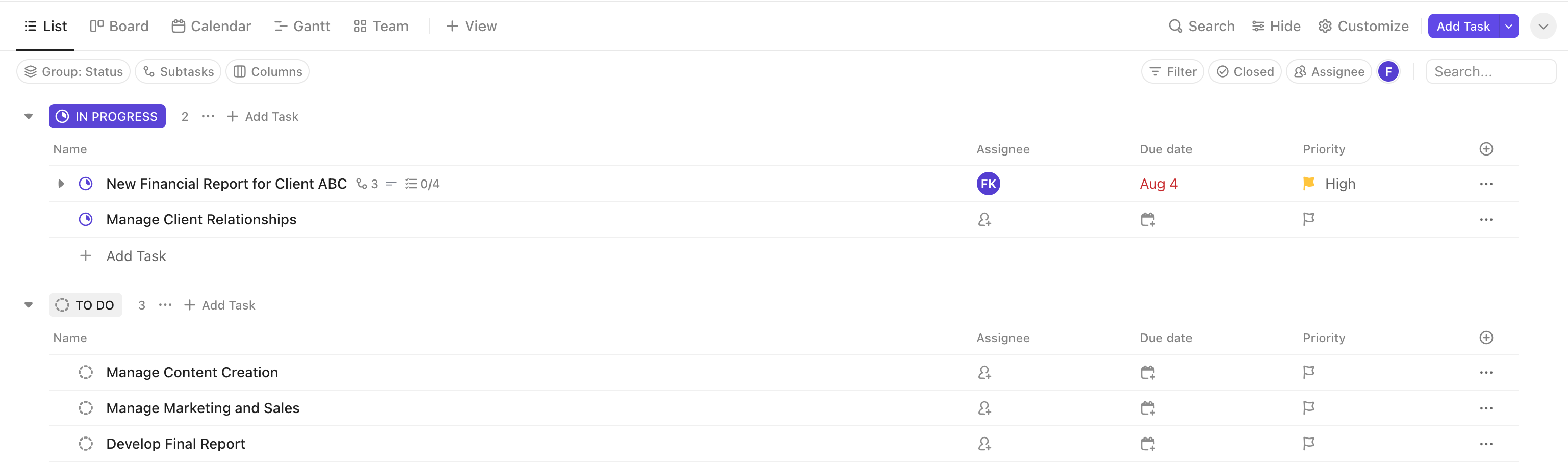
However, click the Whiteboard view to visualize these tasks as a set of interlinked elements.
Click the +View button and select Whiteboard.
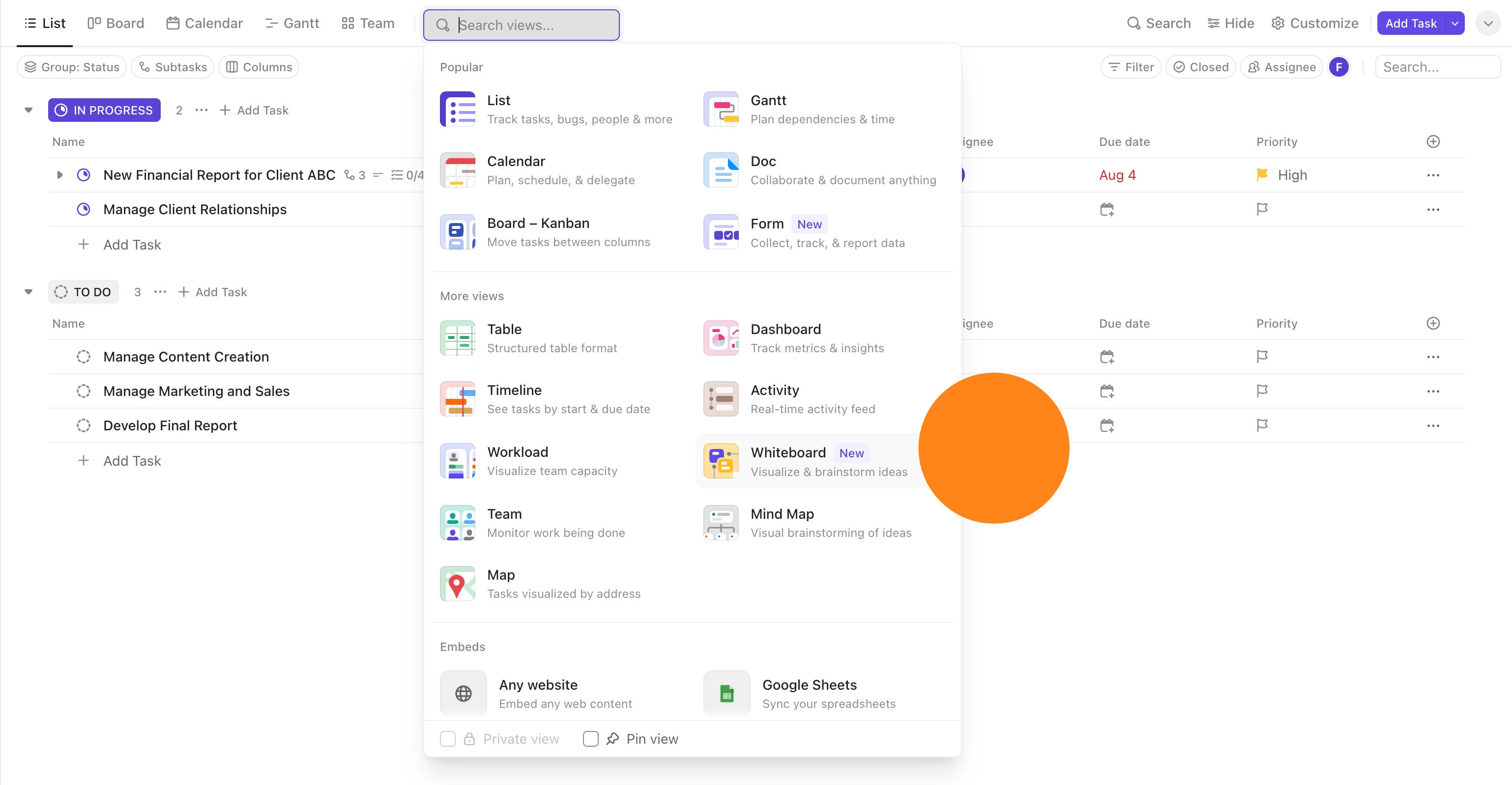
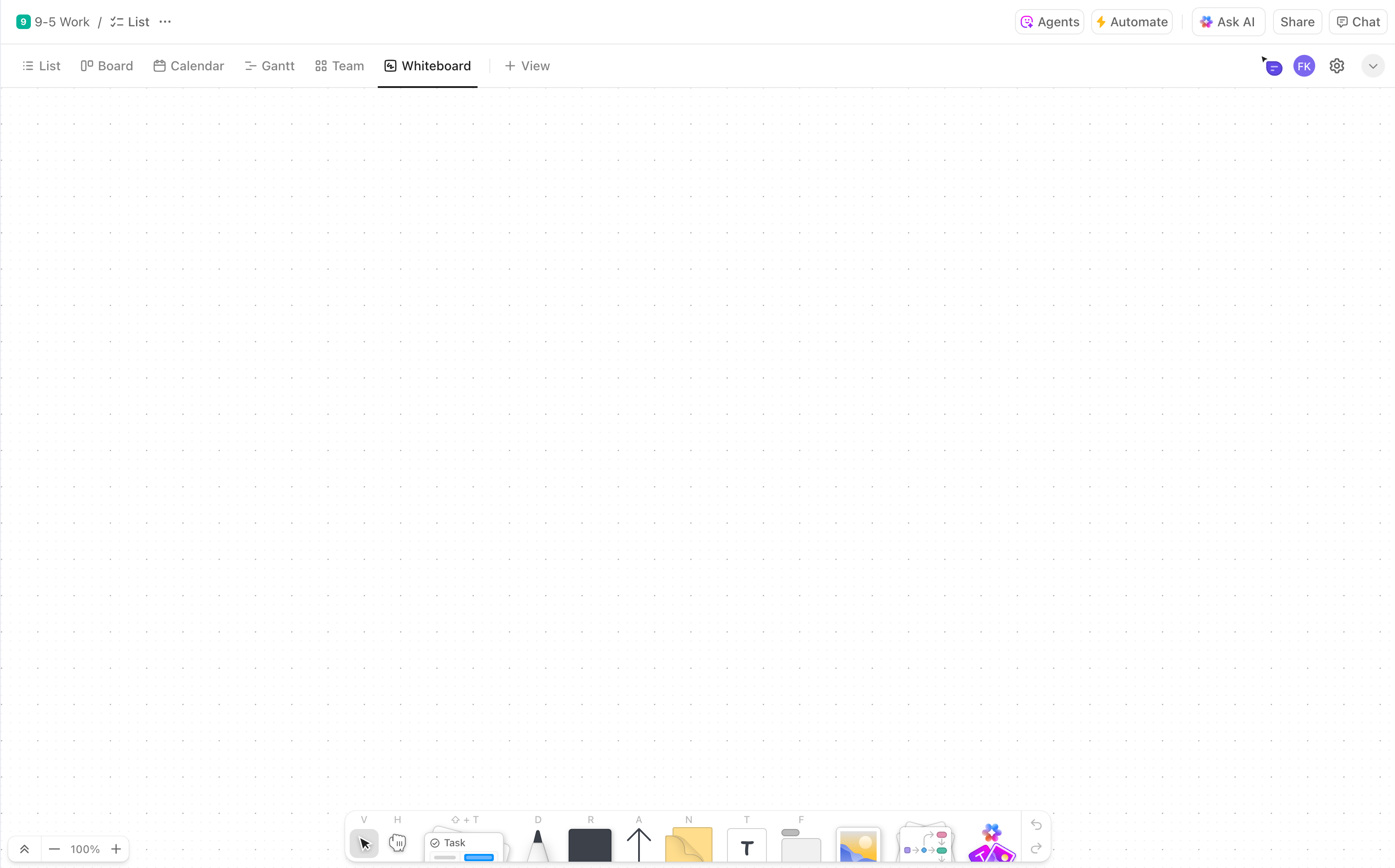
A blank canvas will appear.
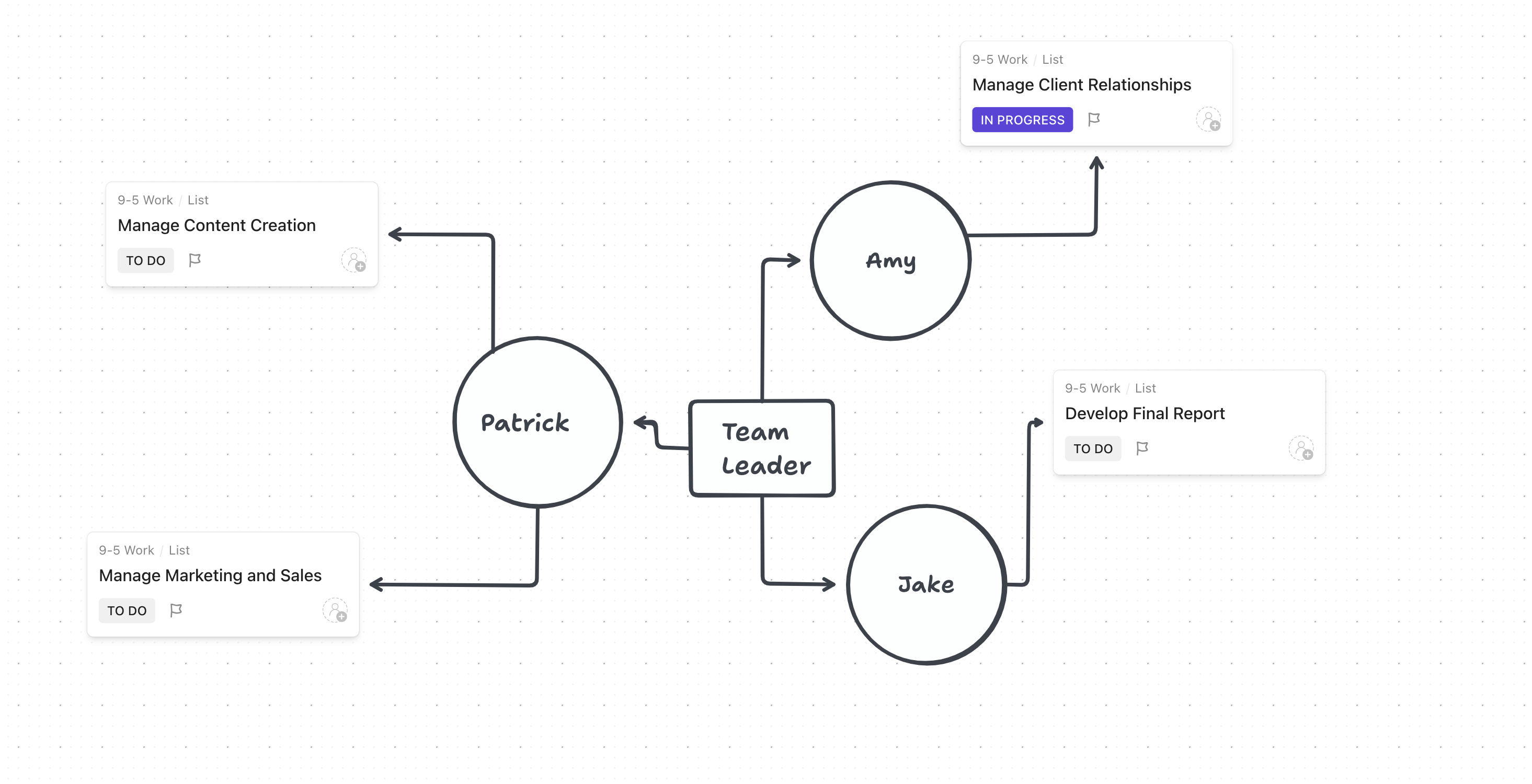
Select tasks and add them to the Whiteboard. Add shapes to visualize how your team works.
Navigate to the top right side of your ClickUp workspace. Click the Ask AI button.
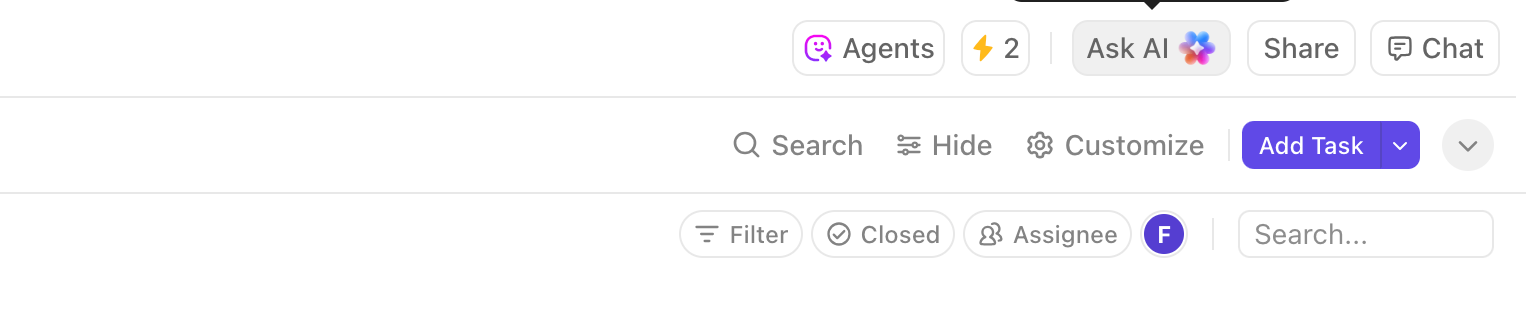
You will see this window.
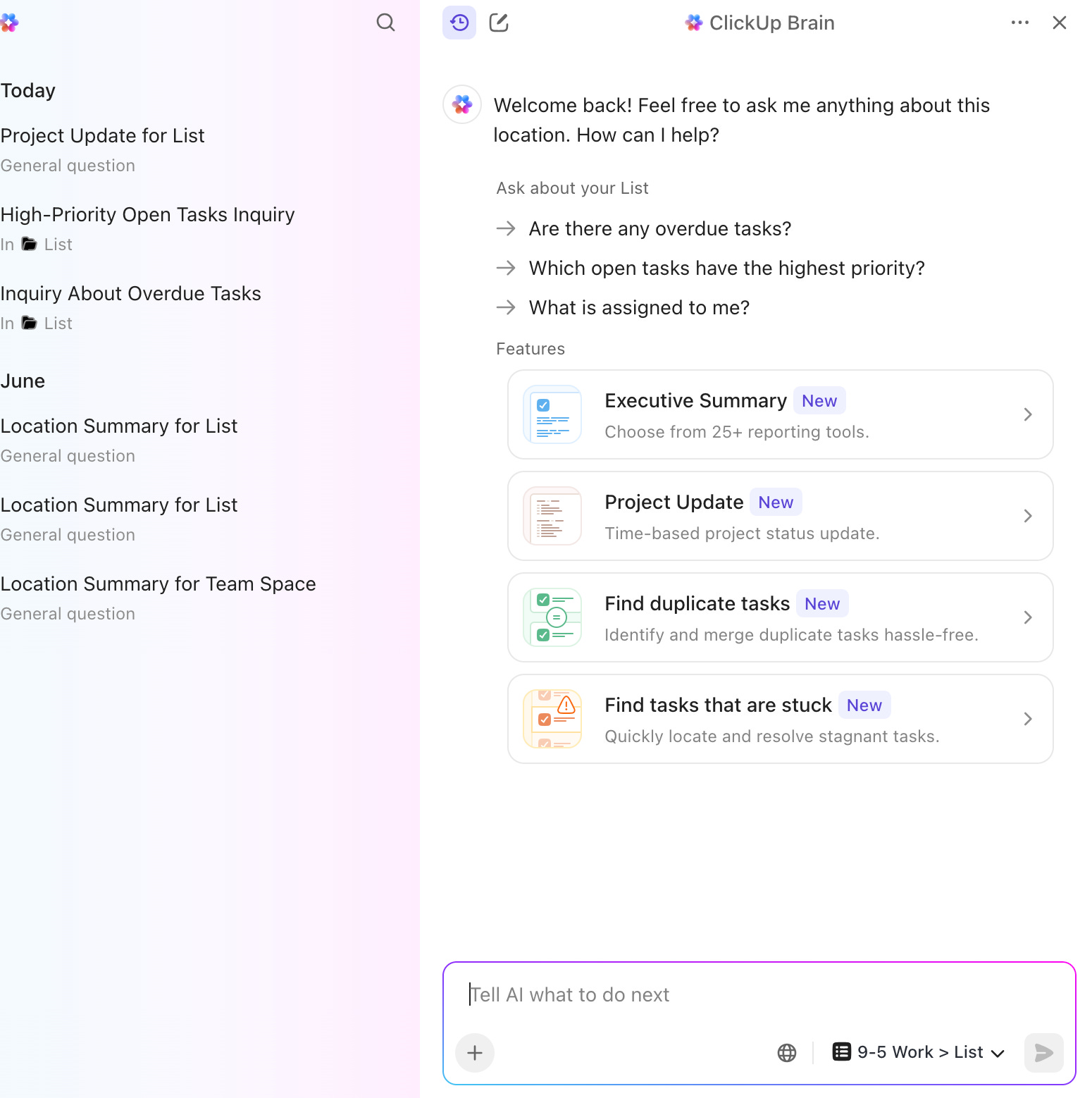
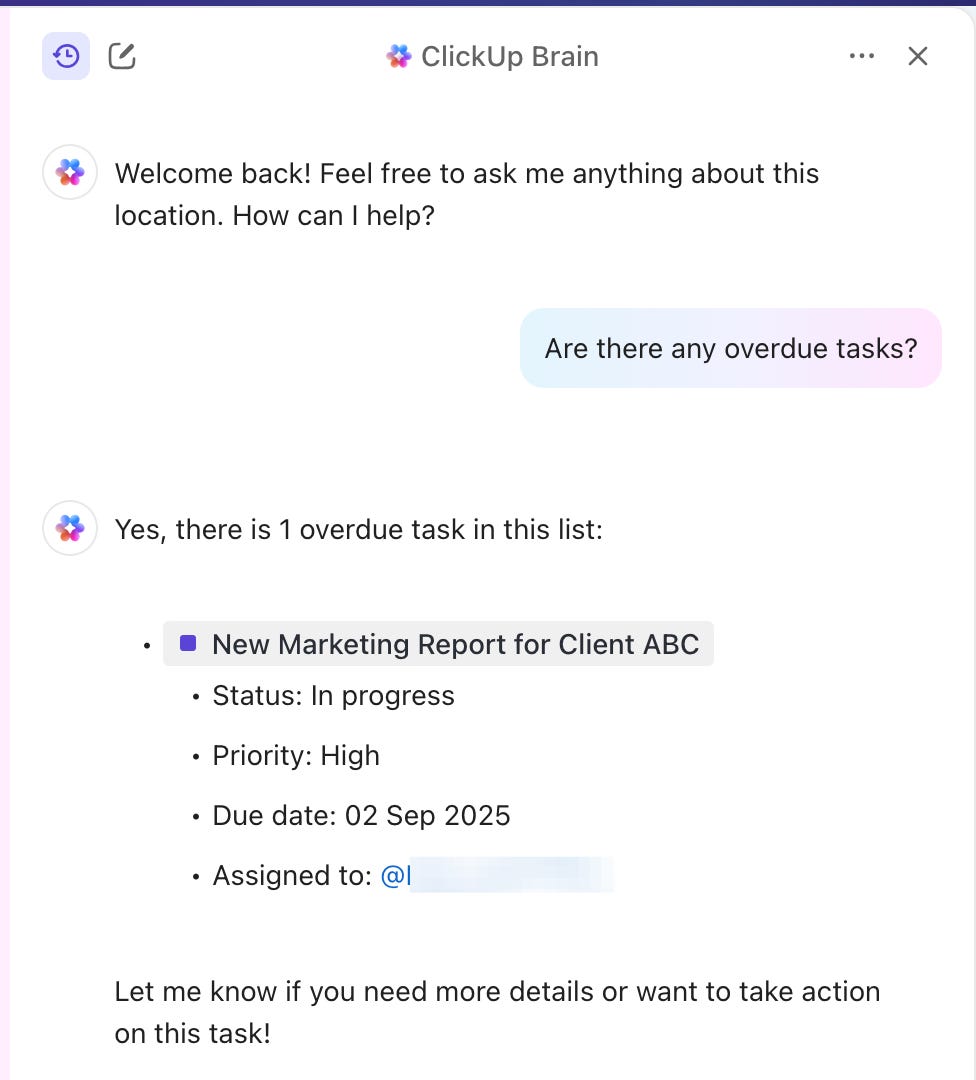
Simply ask which tasks are assigned to team members or which you are working on.
Ask which tasks are overdue and ClickUp Brain will bring these up, showing the individual assigned to the task.
As a team leader, leverage the free Whiteboard tool to track tasks in a visual manner. I find this working easily even in personal task management.
What’s more, you can create Superagents that run in the background and give updates from what each team member is working on daily.
Click AI > Create Agent
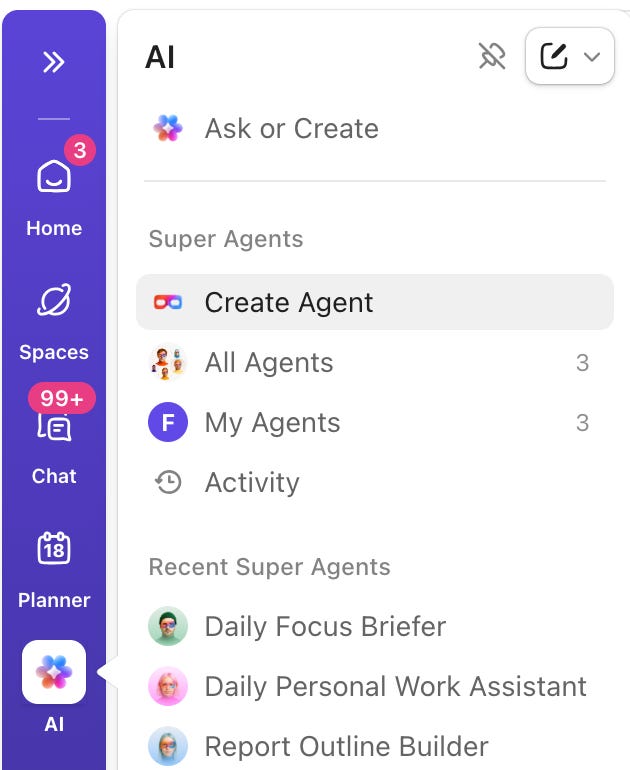
What you want is this:
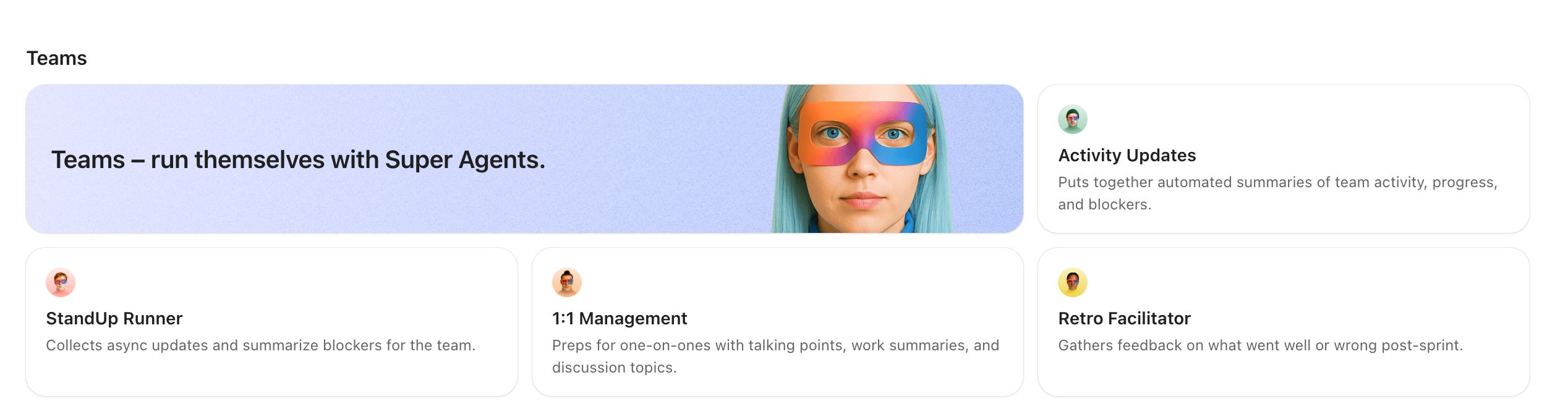
Select Activity Updates and an agent will be created.
This way, you will receive updates from your team every morning and collaboration will be much easier.
ClickUp is free. Sign Up here.
That’s it for now.
Watch out for next week’s productivity insights in your inbox.
As always, fresh ideas are welcome. Please feel free to send in your feedback, thoughts, questions, and suggestions—I read them all!
If you want to pass this newsletter on to a friend, here’s a link to make it easier.
Catch you again soon.
Have a great day :)