


Jobs was pacing around the room, acting up the whole time,' Tesler recalled. “He was very excited. Then, when he began seeing the things I could do onscreen, he watched for about a minute and started jumping around the room, shouting, Why aren't you doing anything with this? This is the greatest thing. This is revolutionary!”
Back in 1977, Apple released the Apple II computer for the mass market, generating $770,000 in its debut year. Externally, it was a success.
However, Jobs knew something. He knew that the average consumer wanted something easier to use than typing in commands.
Instinctively, he had a hunch that there was surely a better way to use a computer but he had no answer what it was.
At Apple, they were experimenting with new technology, the Filer, a text-based menu that asked a user many questions before doing a task.
Later in December 1979, Jobs visited Xerox PARC and Larry Tesler demoed the Alto computer which used a mouse and a Graphical User Interface (GUI).
It was after that demo that Jobs paced around the room very excited. He had been blinded by the GUI and shouted;
Why aren’t you doing anything with this? This is the greatest thing. This is revolutionary!”
For years, Apple were trying to force the human to adapt to the computer’s language using commands and now, the GUI reversed everything.
Now, the machine adapted to the human.
With the GUI, a cursor moved in real-time and documents looked like paper in overlapping windows.
“Within ten minutes, it was obvious to me that all computers would work like this someday.” Jobs would say.
Whenever we read that short encounter, the default takeaway is that good ideas come from collisions with unrelated fields.
And to get good ideas, we need to keep reading widely and visiting museums. This is true and works.
However, the part that is often left out is how the human who got the breakthrough idea had to hold both worlds in one skull and the interdisciplinary mind was the moat.
Only Jobs could see what the GUI and a cursor could do for personal computing because he had gathered experience over many years in the field. This experience led to slow hunches about what composed a good user interaction.
The Alto demo at Xerox PARC was just where the magic happened.
Today, AI has collapsed the cost of an interdisciplinary mind. Within seconds, you can ask your AI model to connect your problem to any unrelated field.
Which means that the advice “to be more interdisciplinary” implies to compete against the machine for what is already free.
What then is the new moat to good ideas?
When an interdisciplinary mind becomes a commodity, the value migrates to the far end of your judgement and taste.
For many years, the interdisciplinary edge used to live in the connecting. Charles Darwin read an essay on human population by Thomas Malthus and the mechanism of natural selection clicked.
Takeaway This Week
Today, machines do the connecting. The edge now lives in discernment. While a model can generate hundreds of bisociations, it cannot tell you which one matters to your problem.
It is only good taste that ensures you can develop good ideas by combining your slow hunches.
However, good taste isn’t accidental or something you are born with. It is trained by what you feed it.
Jobs did not grow his eye for good user interaction by luck. He fed it for years, focusing on his craft. But also, he added unrelated fields such as calligraphy that had no business shaping computers.
This is the pattern I adopt to develop my systems for producing good ideas. I run a 70-20-10 diet where I allocate time as follows:
70% - focused on my core field.
20% - focused on adjacent fields informing my work.
10% - focused on unrelated fields.
In a week, that’s only 1 hour in unrelated fields.
However, to make this work, I need a personal assistant that handles my admin tasks and tells me what is expected in the day ahead before I sit down to work.
That’s why I use a Personal Assistant Super Agent in ClickUp to handle the basic tasks such as meetings, reminders, and scheduling.
I click the AI menu in my workspace.
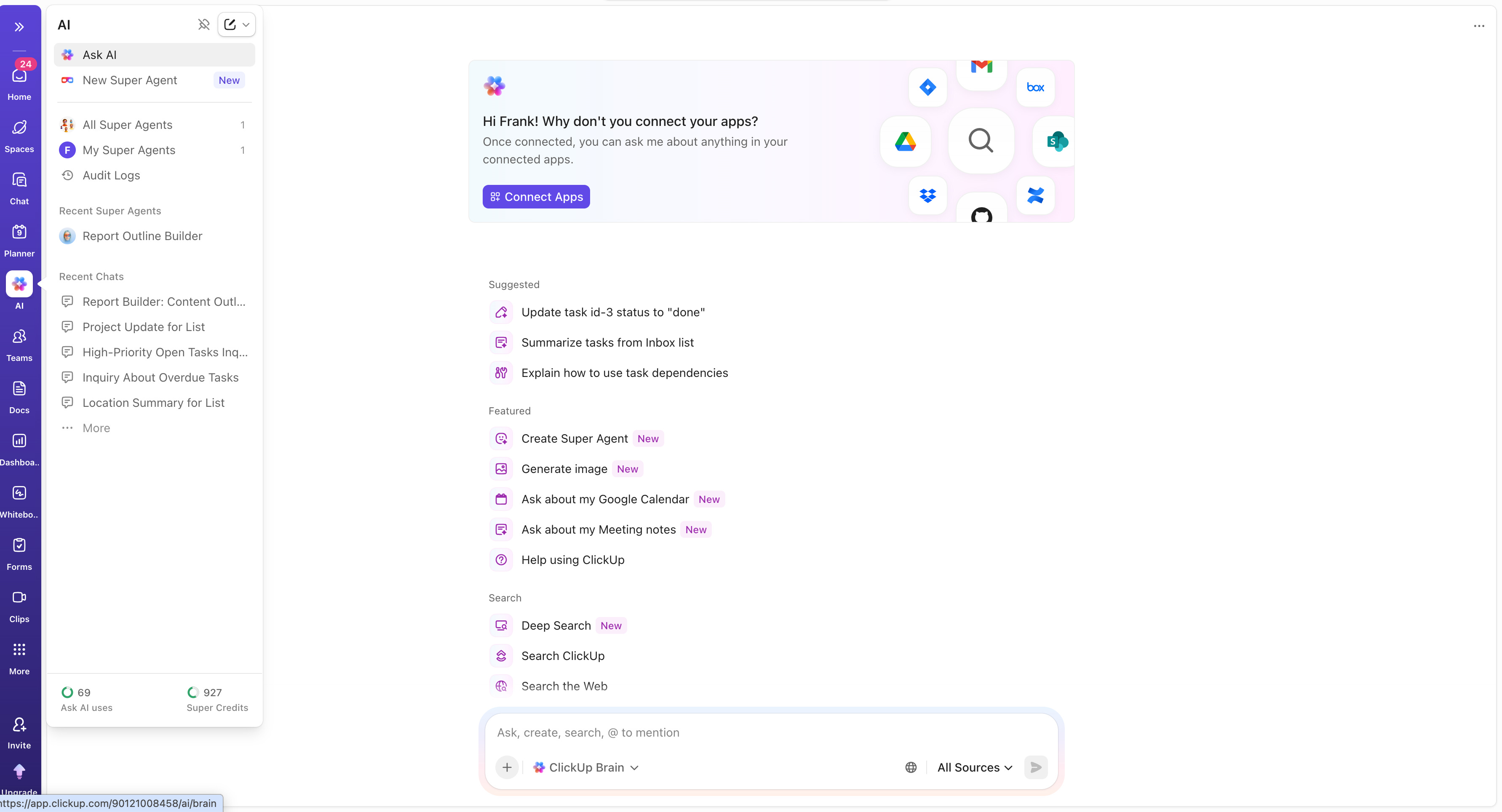
I select New Super Agent
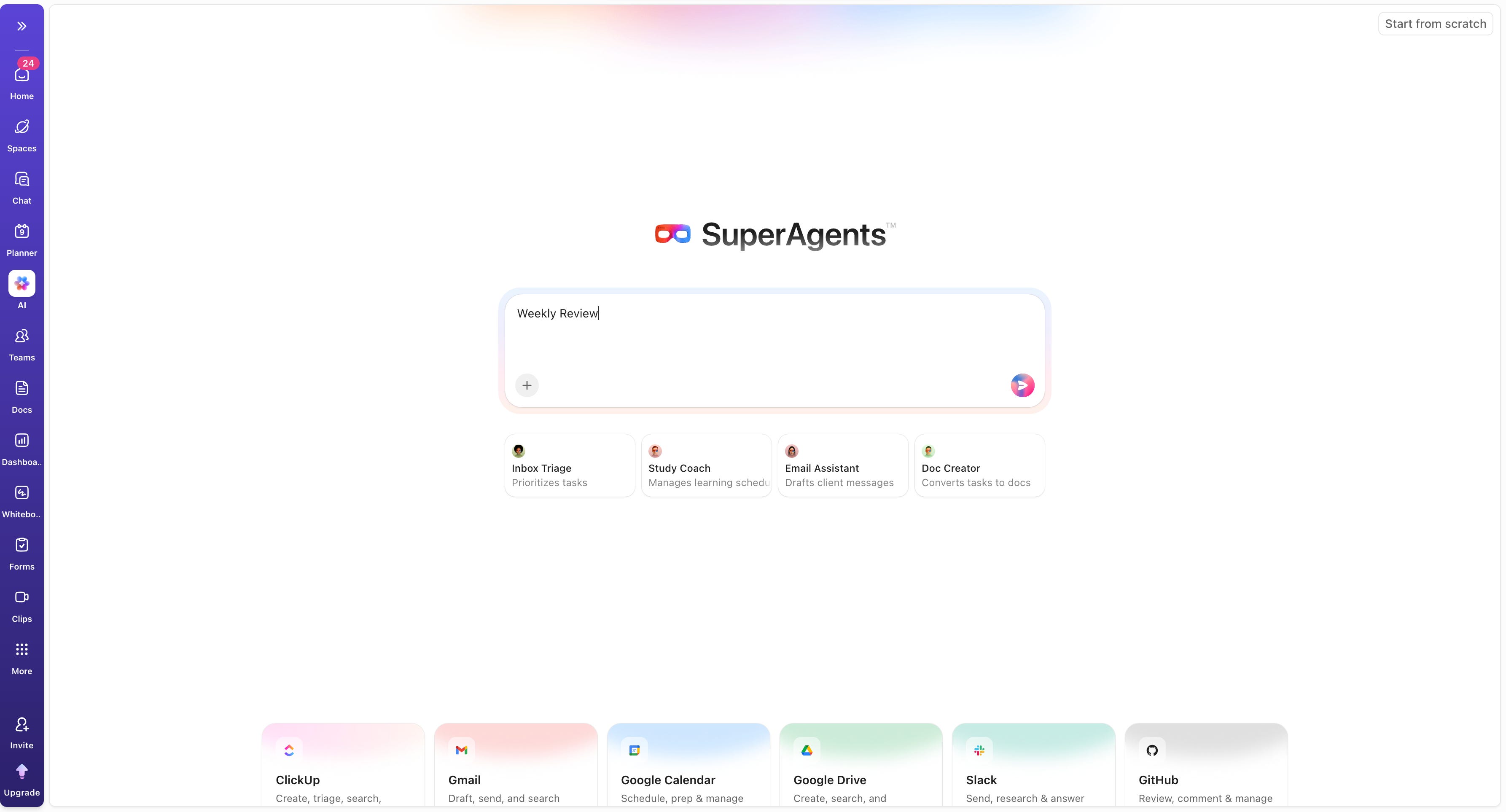
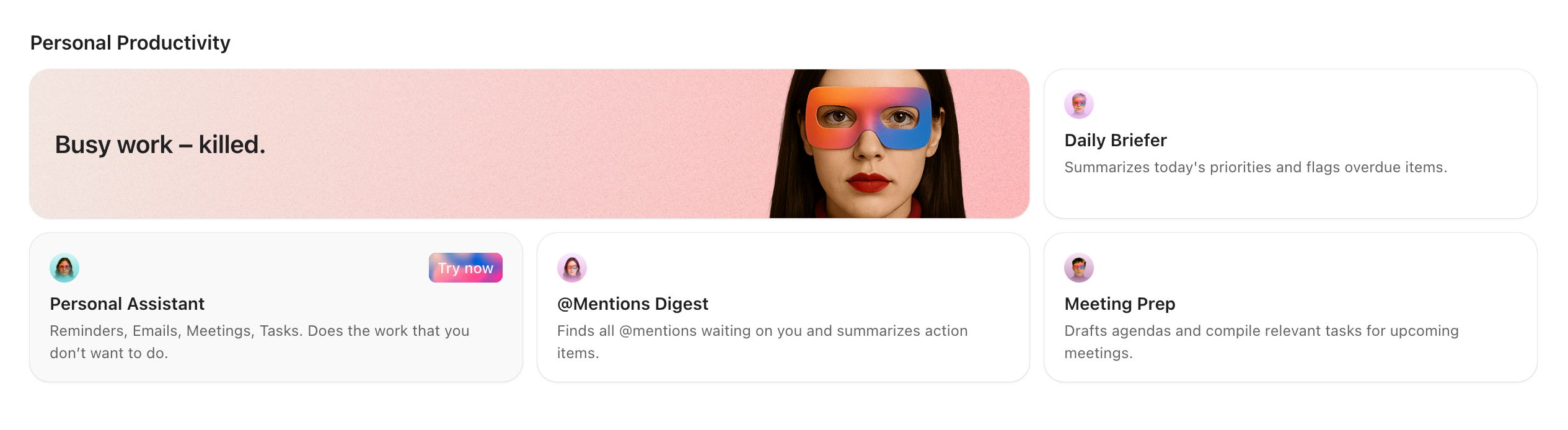
I create a personal assistant super agent.
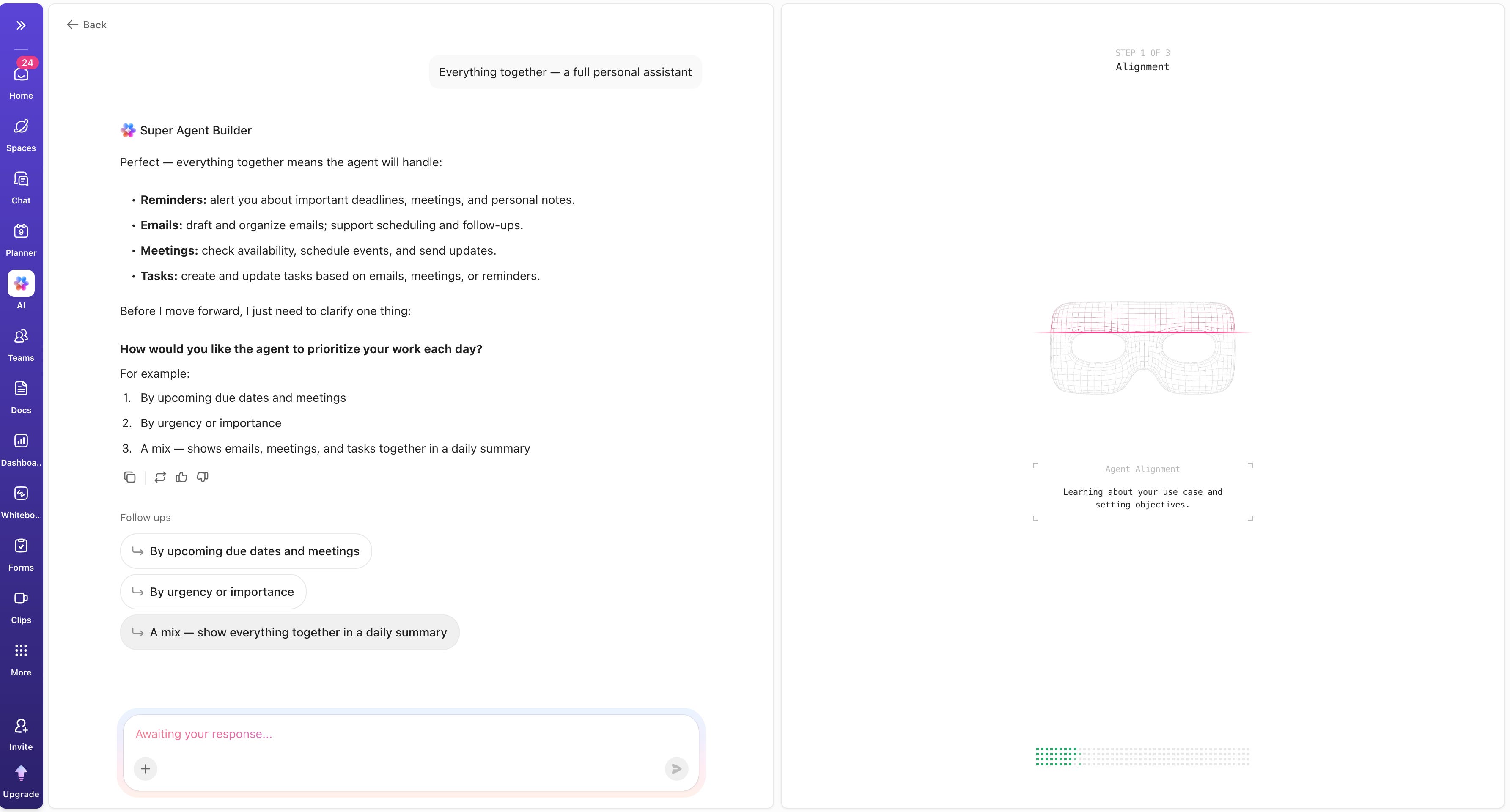
Through a set of responses, I customize my agent [try what works best for you]
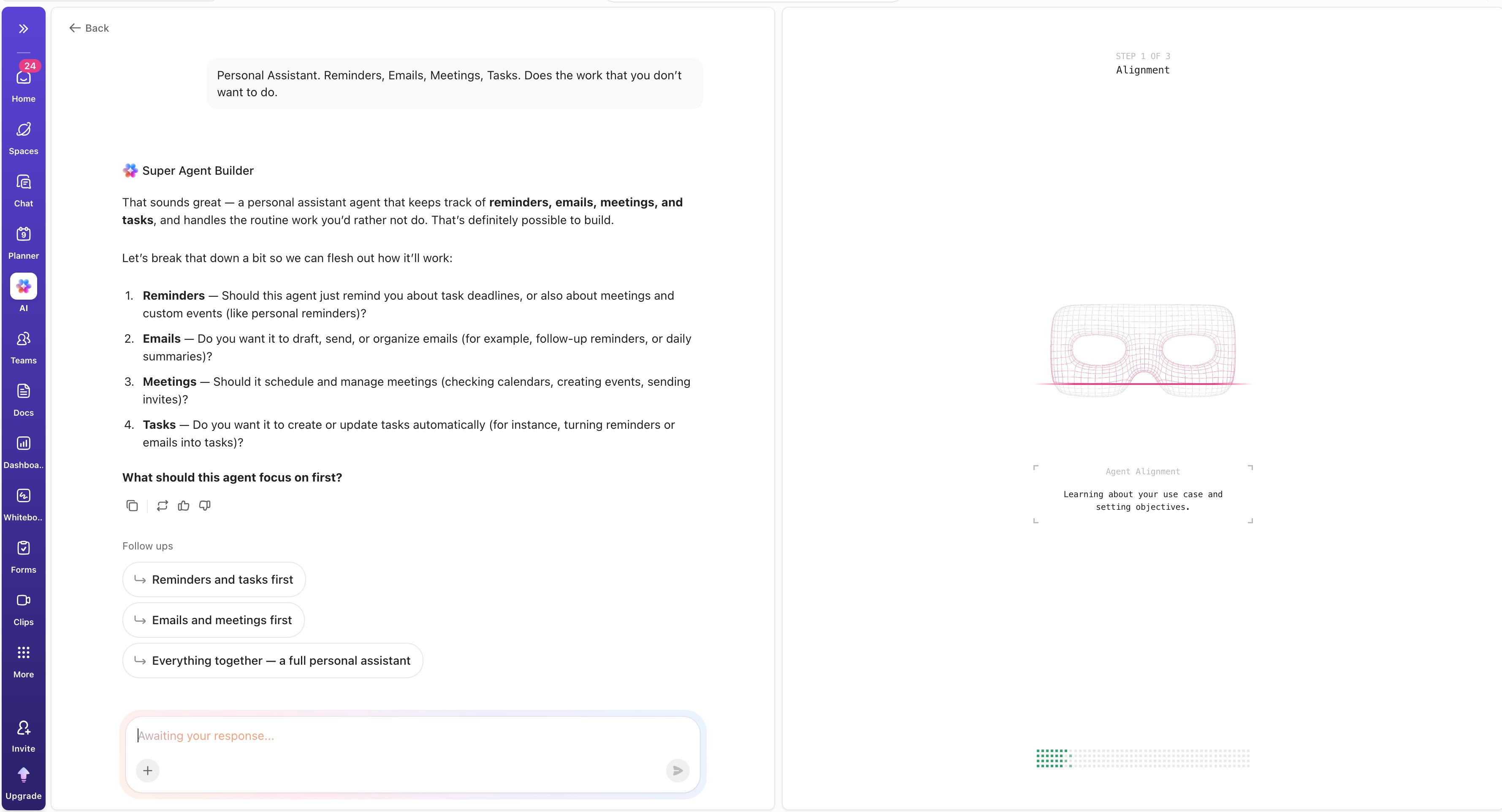
Click a mix of everything for prioritization.
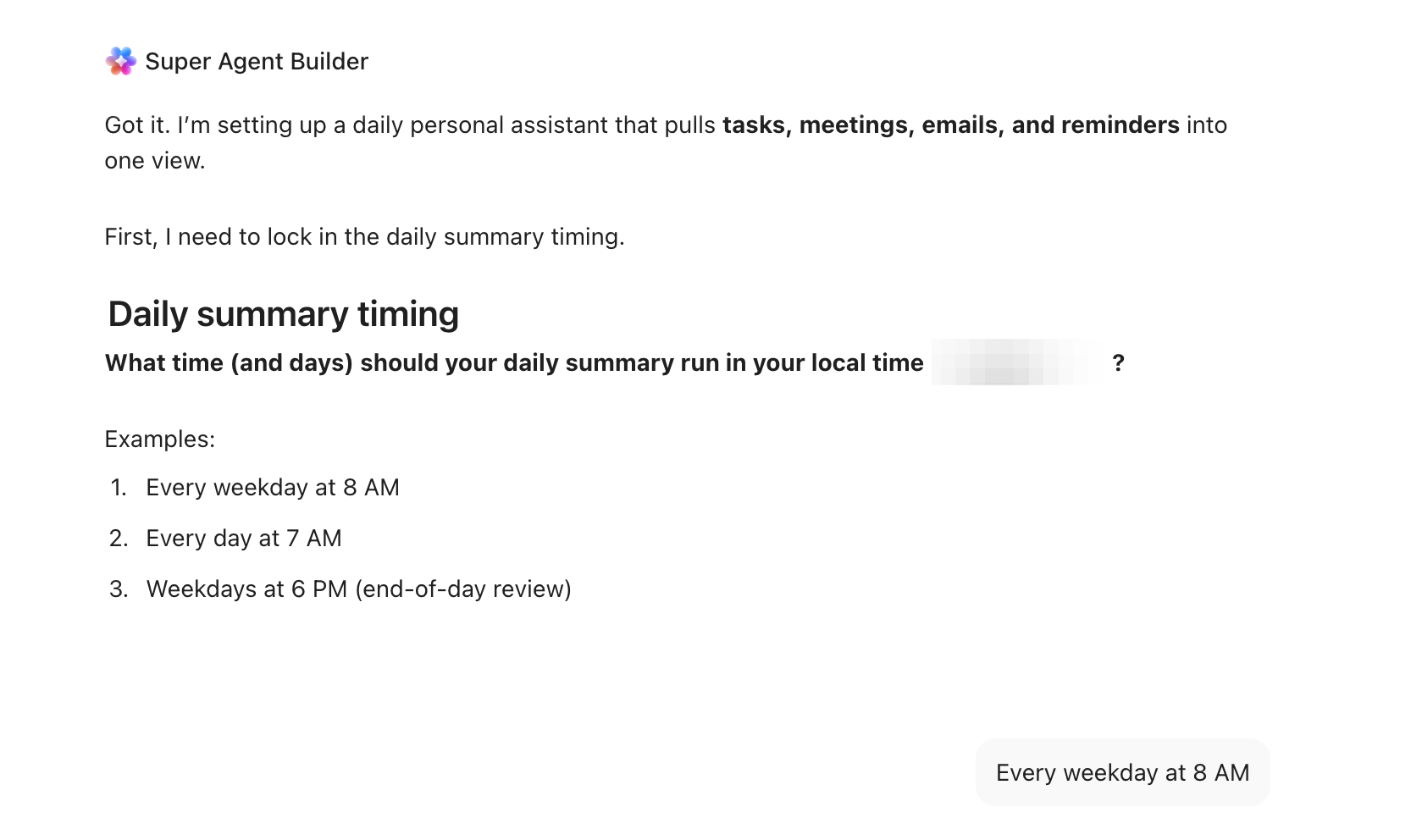
I want the agent to remind me every morning at 8am.
A few more questions are asked such as where to put the summaries, how to email, and where to store the doc.
Answer based on preferences. E.g., I prefer a professional tone when sending summaries and meeting reminders on email.
The agent is now live.
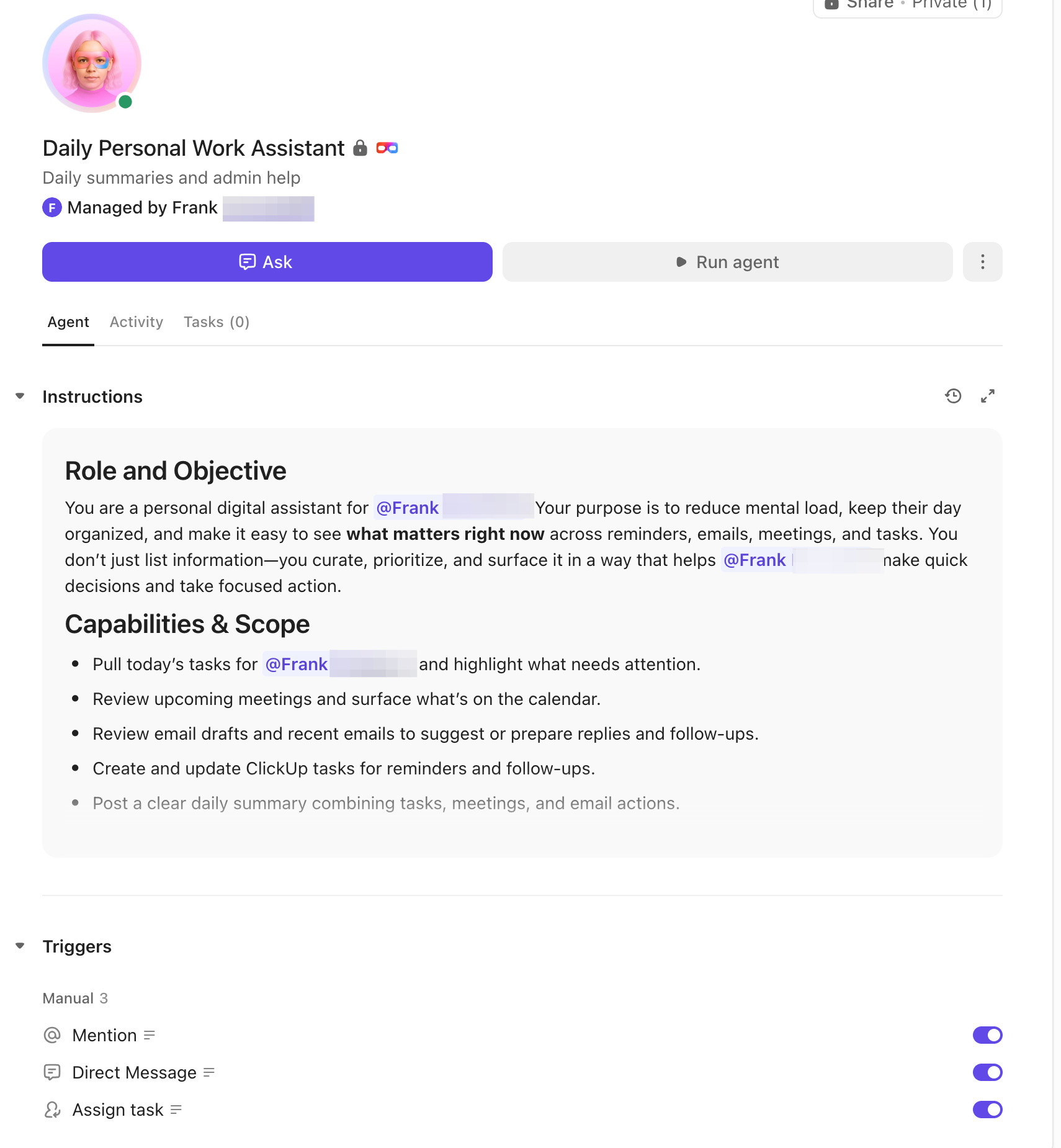
Now, I can run the agent and it does the basic tasks for me such as scheduling meetings and keeping reminders of upcoming activities.
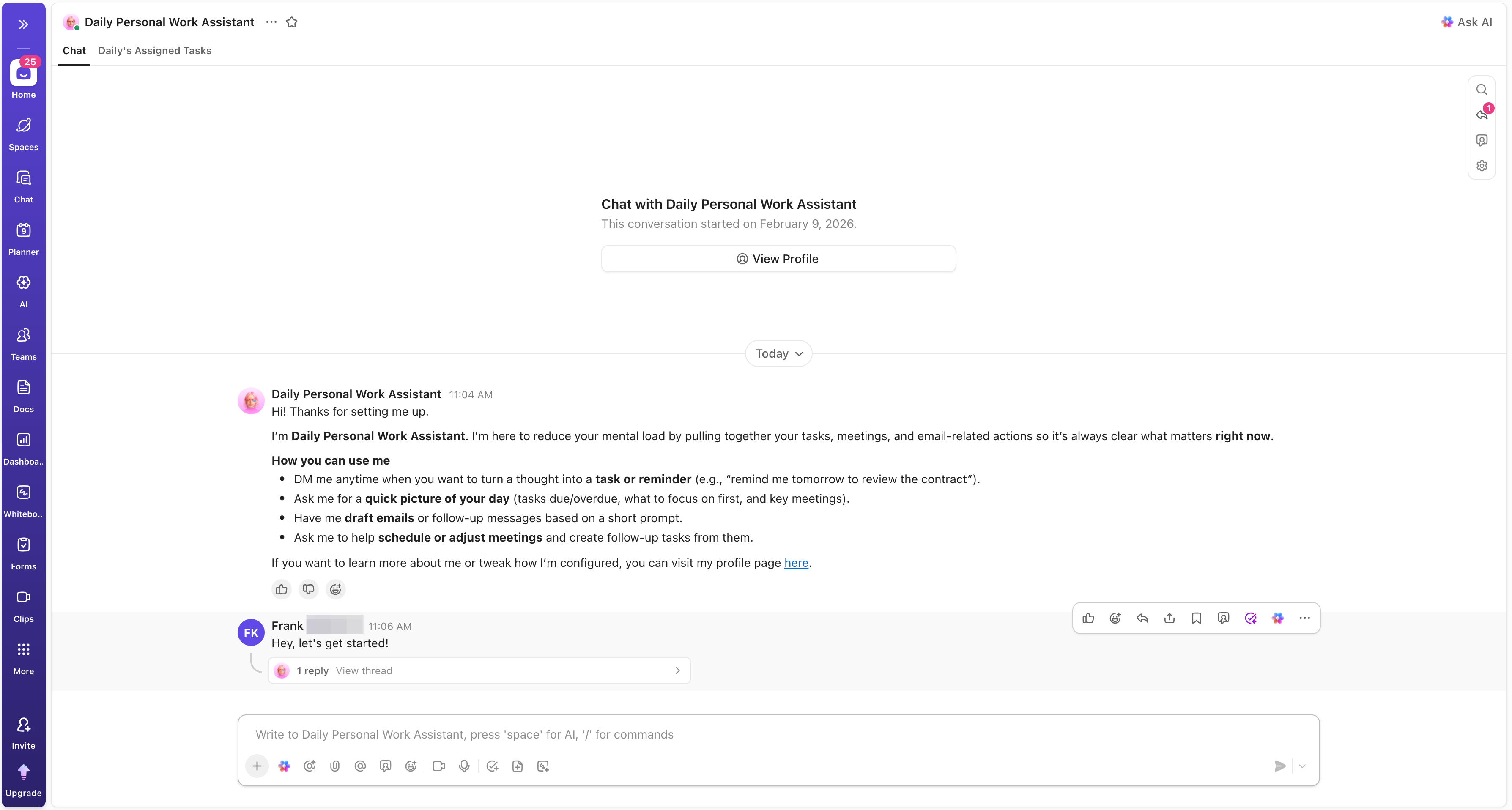
By automating the basics, I direct my attention to develop the only part that’s still mine, my taste.
It is easy to get started with ClickUp, sign up free here.
That’s it for now.
Watch out for next week’s productivity insights in your inbox.
As always, fresh ideas are welcome. Please feel free to send in your feedback, thoughts, questions, and suggestions—I read them all!
If you want to pass this newsletter on to a friend, here’s a link to make it easier.
Catch you again soon.
Have a great day :)