
It Was Both Value and Harm
They could connect to anyone but then the access led to more harm


In the 1950s and 1960s, researchers who needed to share their work with their peers faced a common struggle.
Communication was a high-friction process. If you sent a report via the physical post mail, you waited for weeks to get a reply.
Take James Watson and Francis Crick from Cambridge who were following up on the DNA model by American scientist Linus Pauling. They sighed as they had to wait for weeks for the feedback via boat.
“For over a week, we were left in suspense, completely paralyzed by the mail schedule, unable to see where Linus had gone right or wrong, knowing that by the time our letters reached California, weeks would have passed.”
The alternative, a long-distance call, wasn’t cheap or convenient either. American Telephone and Telegraph Company (AT&T) was the monopoly and charged a hefty price.
Moreover, you had to have all the scientists you were contacting ready and waiting on the call at the same time.
Then in 1971, everything changed.
Ray Tomlinson was trying to figure out how to send messages across computers over a network and sent a test message, a random string 'QWERTYUIOP' and it worked.
Electronic mail (e-mail) now meant that you could send and receive a message, not in weeks, but in real-time.
For ARPA Director Stephen Lukasik, in 1973, he loved the efficiency of email so much that he forced his entire network of directors to use it to reach him.
He even lugged a 30-pound portable terminal on trips just to stay connected. He would dial his Texas Instruments Silent 700 terminal every hour just to check his messages.
However, by 1973, he would confide to his directors about how e-mail was already overwhelming him.
“Larry, this e-mail is great,” Lukasik told him, “but it's a mess! I can't keep track of anything.”
The tool that brought in magical efficiency was now the same one that was bleeding him dry.
To circumvent this, they would develop Receive Decks (RD), a macro-program that helped email users to list, filter what to read, and delete the rest.
A few years later, Donald Knuth, a Stanford computer scientist and an early-adopter of e-mail would also complain how it was now threatening his ability to complete deep meaningful work.
To get on-top of his work, he decided to adopt a more brutal approach by deleting his email address stating,
“Email is a wonderful thing for people whose role in life is to be on top of things. But not for me; my role is to be on the bottom of things.”
Takeaway This Week
This week we revisit the idea of toxic utility, a concept describing how the tools we use also end up distracting us from our work.
Email is one such tool. We need it for work yet it can distract us from doing any work.
Back in the 1970s, early-adopters of email observed how they were now overwhelmed by the same tool they loved for its efficiency.
For Knuth, he adopted the more brutal approach - abstinence. However, we can’t quite adopt this because we rely on email for work.
Instead, we look at Lukasik’s approach to re-architect how we approach email to use it without being distracted. When email became a chaotic pile, he adopted RD, a tool that filtered what emails he saw.
I also do the same thing, except my filter is smart enough to learn.
SaneBox sits on top of the email I already use and quietly triages it: anything that isn't genuinely for-me-now drops into a folder I skim once a day, in one digest, on my terms.
Senders I never want to hear from again go into a black hole and don't come back.

Nothing gets deleted and nothing important gets missed. I just stopped being the sorting machine.
SaneBox doesn't fix email, it fixes my relationship to email, which is the only thing the last fifty years say is fixable.
It moves you from an uncluttered mailbox where important messages are mixed with ads and irrelevant promotions such as:
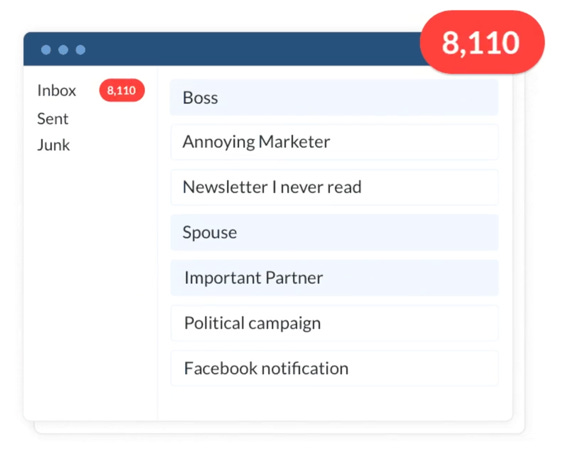
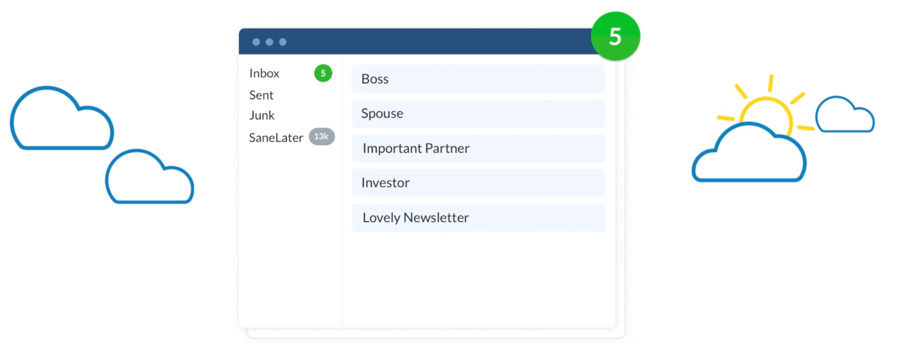
To here, an organized mailbox where you can view all your important emails in the inbox at a glance:
It truly works for others.
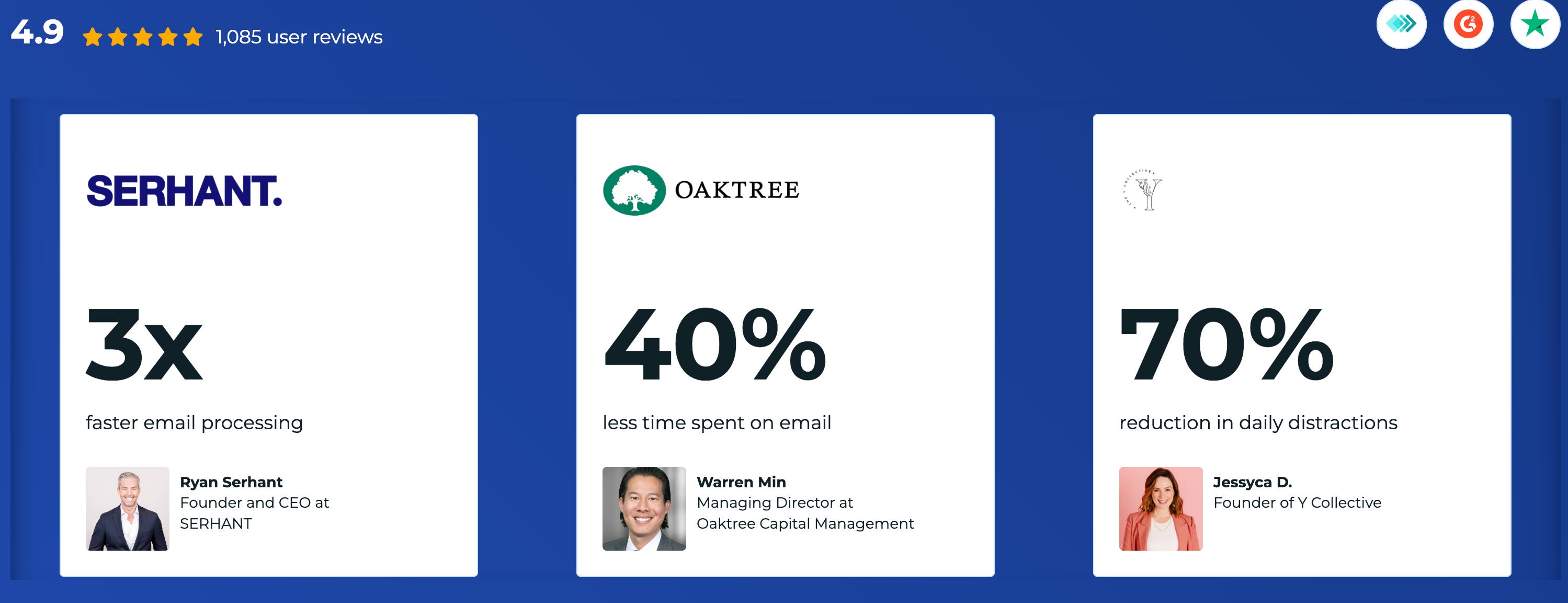
And will work for you. Test SaneBox free for 14 days here.
Struggling to Focus Outside Your Inbox
Taming your digital environment is only half the battle.
But there’s a second inbox that never stops pinging, your home. It has no filter, and ignores your calendar entirely.
If you’re running this as a working parent, Bloom Parentify is built for exactly that squeeze - “a system for protecting deep-work blocks around a kid’s schedule instead of around your ideal one.”
That’s it for now.
Watch out for next week’s productivity insights in your inbox.
As always, fresh ideas are welcome. Please feel free to send in your feedback, thoughts, questions, and suggestions—I read them all!
If you want to pass this newsletter on to a friend, here’s a link to make it easier.
Catch you again soon.
Have a great day :)