


If a billionaire businessman handed a blank cheque and asked to write any figure you wanted as a reward for your help in solving their problem, what would you write?
$50,000? $100,000?
That was the exact question a productivity consultant, Ivy Lee, in 1918 was asked by the then president of the Bethlehem Steel company, Charles Schwab.
Schwab had hit a wall in his company. By external measures, they were doing well as the largest shipbuilder in the country and second-largest steel producer.
However, Charles felt that although his executives were good at what they did, the operations could be more efficient and they company could get more things done.
“If you can give us something to show us how to get the things done we already know we ought to do, I'll listen to you and pay you anything within reason you ask.” Schwab would tell Ivy in a meeting.
Lee took his time and answered, “I can give you something in twenty minutes that will increase your efficiency by at least fifty percent.”
However, he asked Schwab to pay him what he thought the advise was worth after trying it out for three months.
Rather than a complex system, Ivy gave a simple solution to each executive.
At the end of the day, write down the 6 most important things to accomplish tomorrow. No more than 6.
Rank them in the true order of their importance.
The next morning, start with number one and don’t touch number two until number one is finished.
Work down the list. Move what you don’t finish to tomorrow.
That was it.
After three months of trying out the experiment, Schwab sent a cheque of $25,000 (roughly $400,000-$500,000 today) to Ivy.
At face value, we might assume that this system was a mere to-do list.
However, it’s only when we dig a little deeper that we get more insights that we could miss.
The secret was the sequence, not the listing, as Warren Buffet would show us decades later.
Buffet was having a conversation with his personal pilot, Mike Flint when he realized that Mike hadn’t achieved some of the deeper career milestones he had set.
Warren asked him to write his 25 career goals and circle out the first 5.
Flint assumed that he would work on the first 5 goals and continue working on the other 20 intermittently.
Buffet disagreed.
“No. You've got it wrong, Mike. Everything you didn't circle just became your Avoid-At-All-Cost list. No matter what, these things get no attention from you until you've succeeded with your top 5.”
Takeaway This Week
The part most people miss is that the threat to your efficiency isn’t your distractions.
It’s the moderately important stuff that you try to get done intermittently alongside your core tasks that really move the needle.
However, as Lee and Buffet show us, all tasks are not created equal and sequencing is the differentiator.
As you soon discover, you become more efficient when you complete your highest leverage tasks before anything else touches your day.
Because if you don’t decide what your most important hours are for, something else does, and most of the time, it’s hardly your most important work.
The Ivy Lee method still works today. The problem is that to make it work means you have to fight day long wars with the small and urgent automated interruptions.
What you need is not more discipline but a system that can absorb these 20 less important tasks so that you can focus on your top 5.
That’s why I use free Super Agents in ClickUp which you can sign up free here.
These are AI teammates that live inside your workspace and set a priority of what’s due, what’s slipping, and what’s urgent long before I open my laptop.
Rather than spending my energy asking “what’s the update on X?” they watch silently and ping me only when something is due or slipping.
Here’s how you can leverage free project Super Agents to focus better.
#Step 1
Create a free workspace in ClickUp
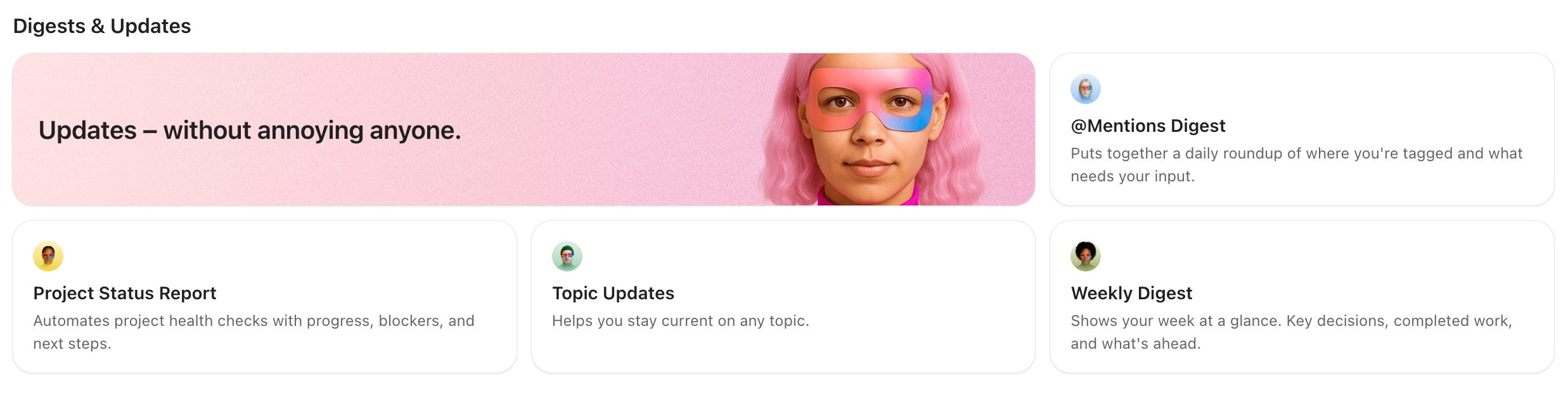
Click the AI > Create Agent menu in your workspace.
What you want is the Digest & Updates agent
#Step 2
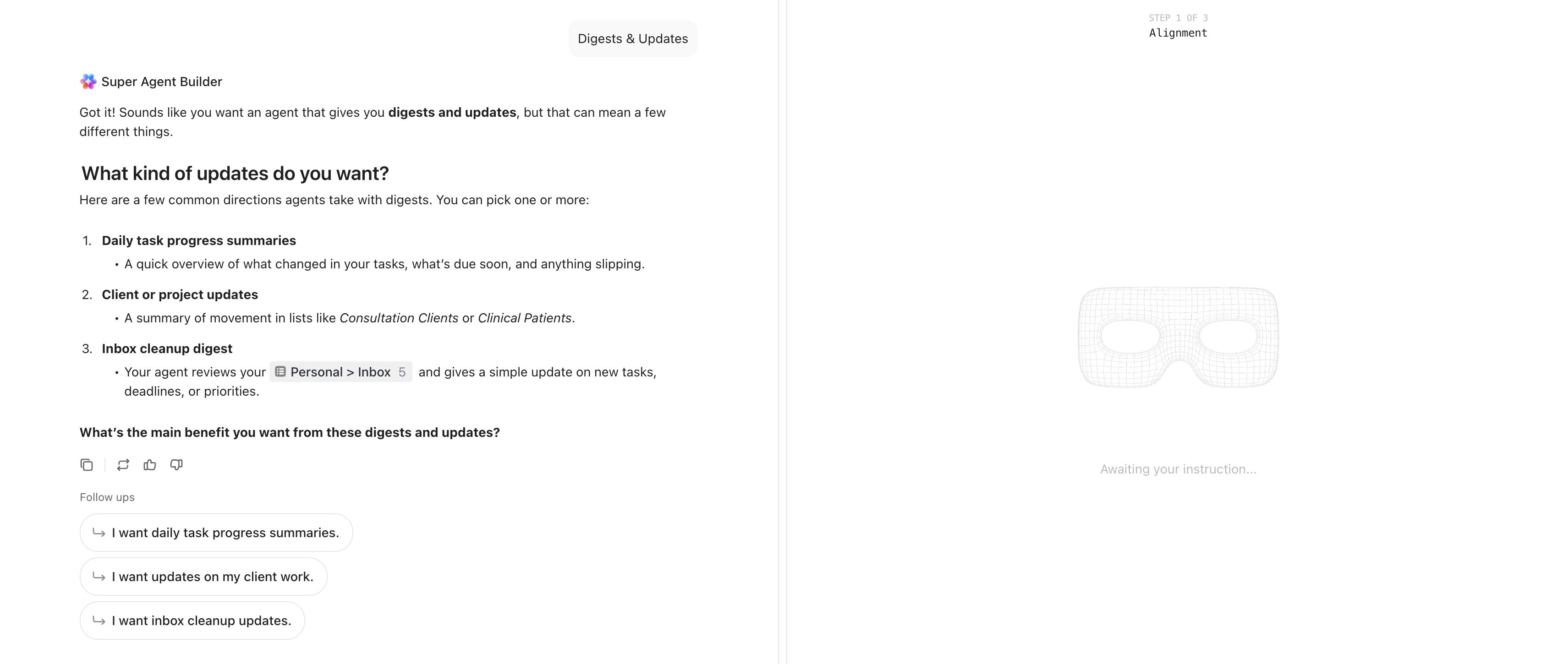
Select daily summaries of your projects.
#Step 3
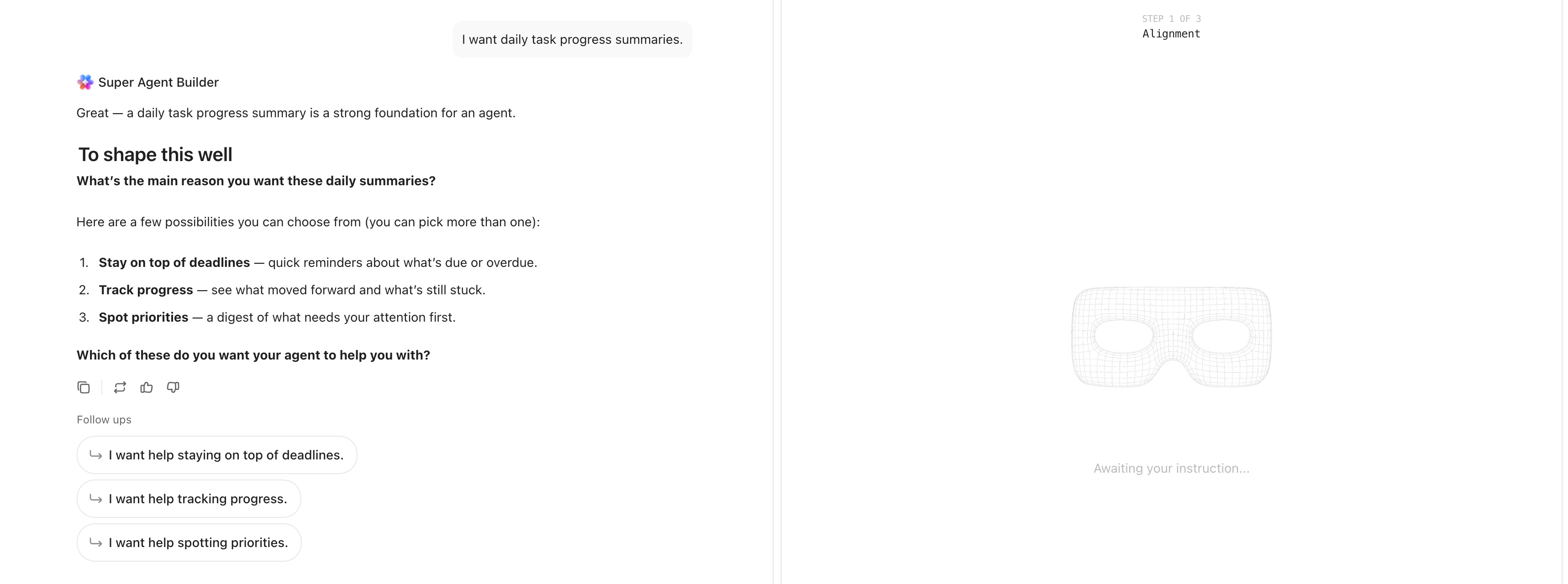
Select tracking progress.
#Step 4
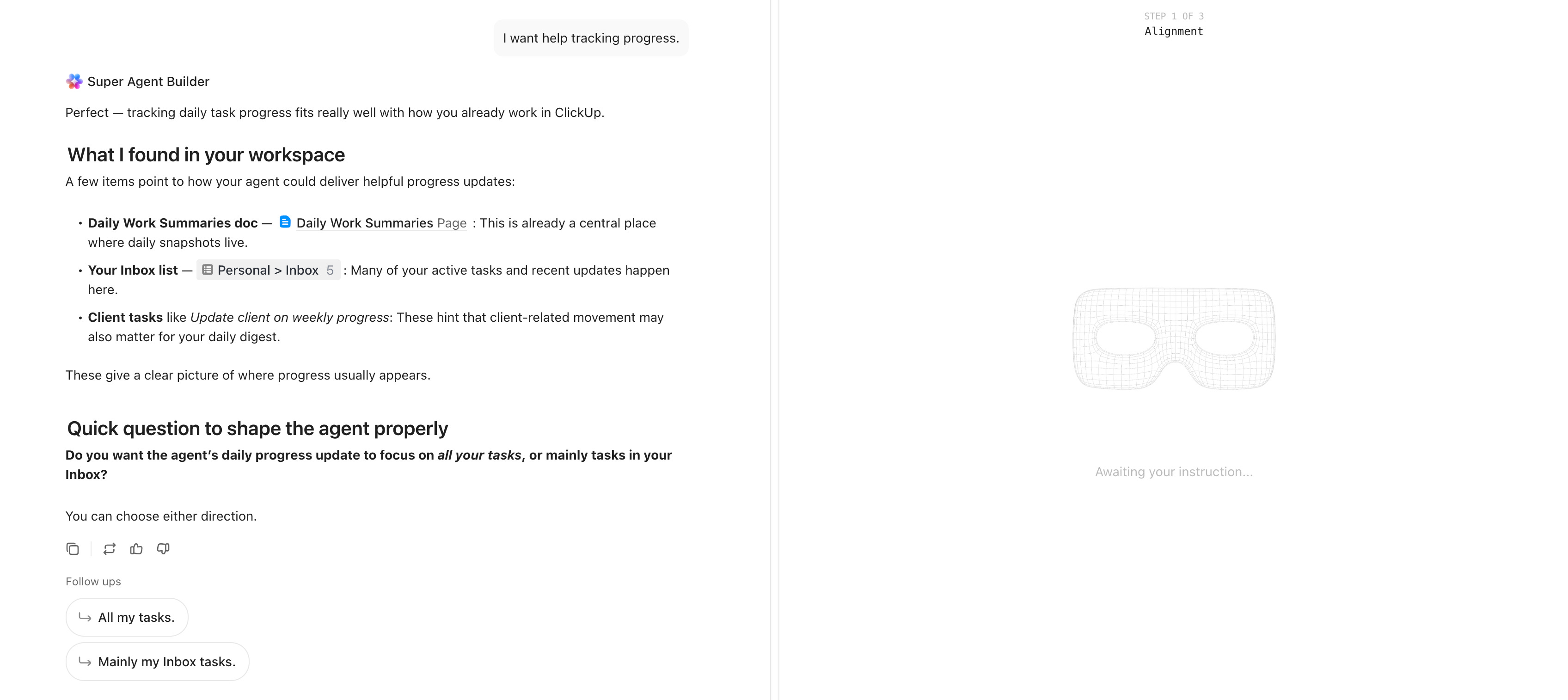
Select all your tasks
#Step 4
Continue adjusting how you want to receive the updates.
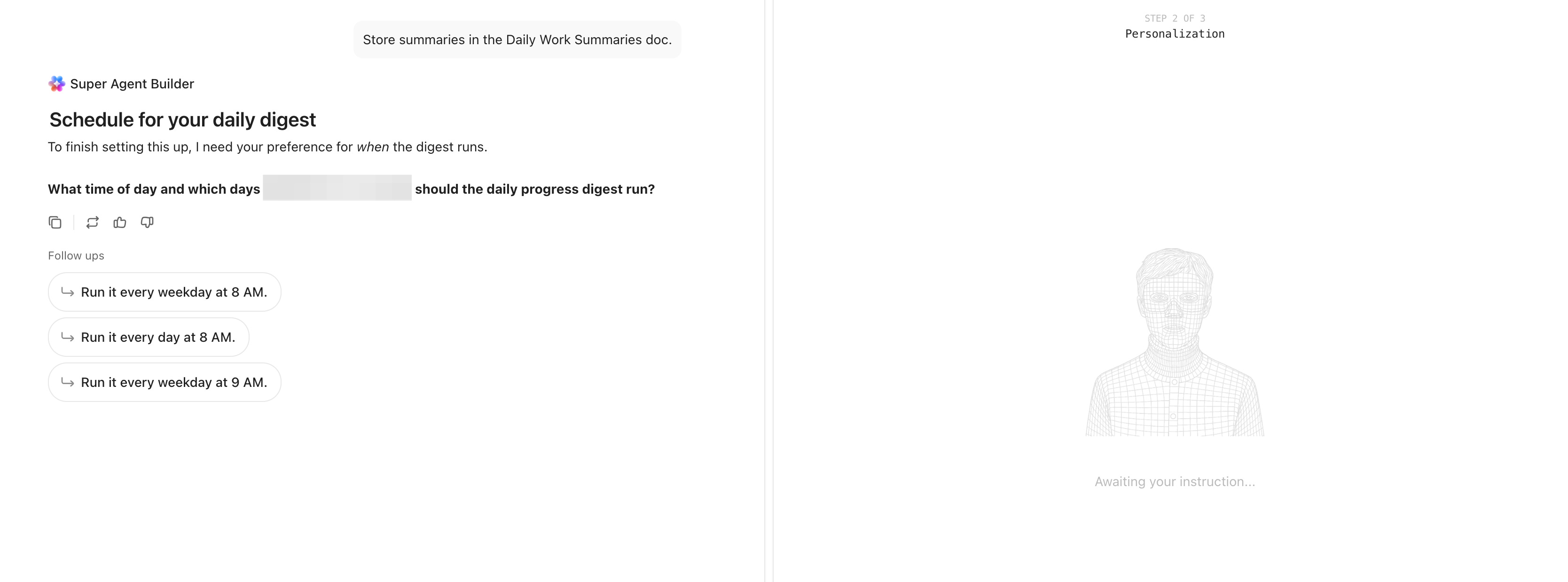
I selected every weekday at 8am.
Continue answering how the updates should be sent.
#Step 5
The agent is now ready.
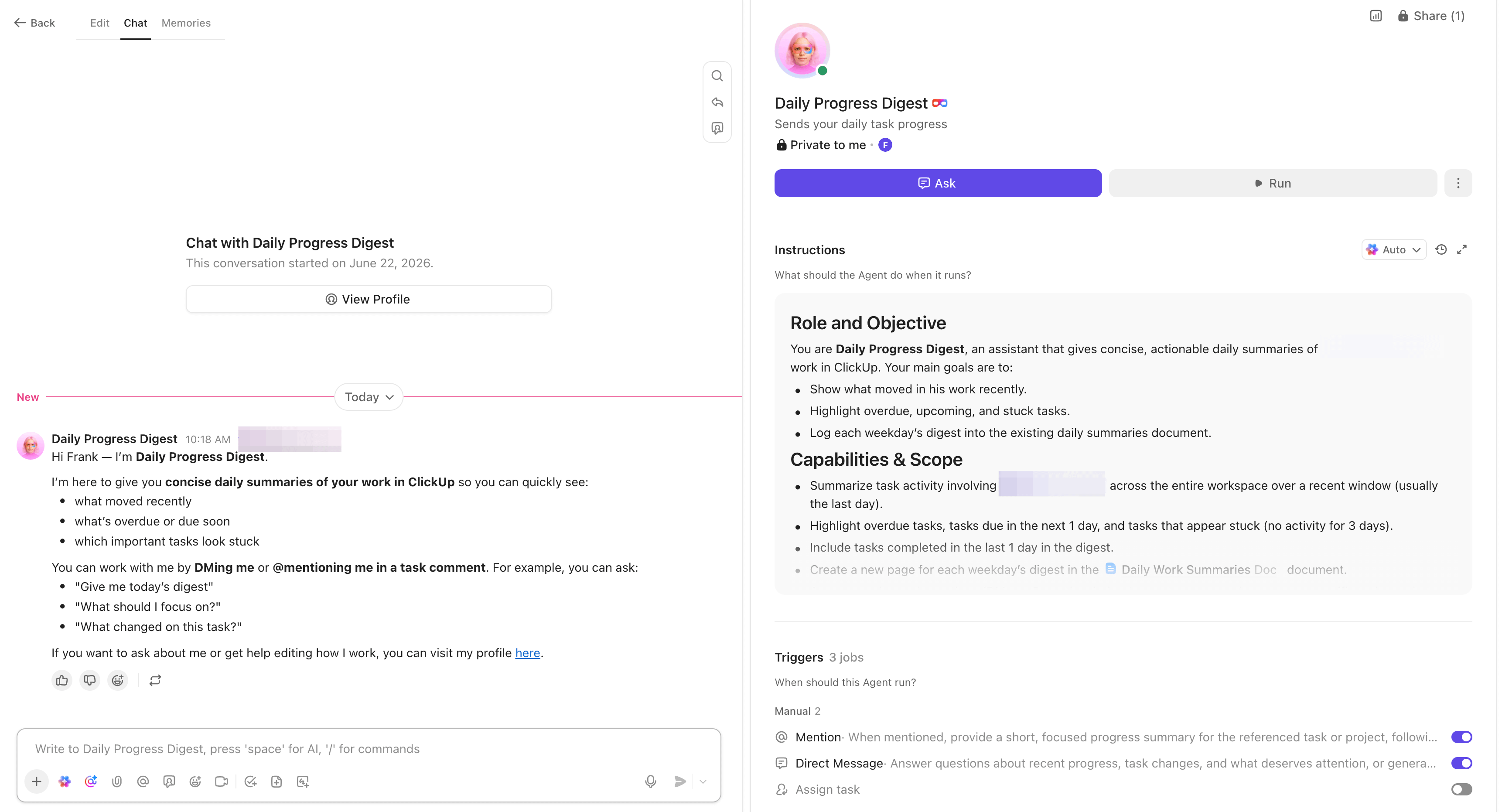
I chat it to give me today’s digest and avoid the tax of wondering “what’s the progress on X?” and the results show up.
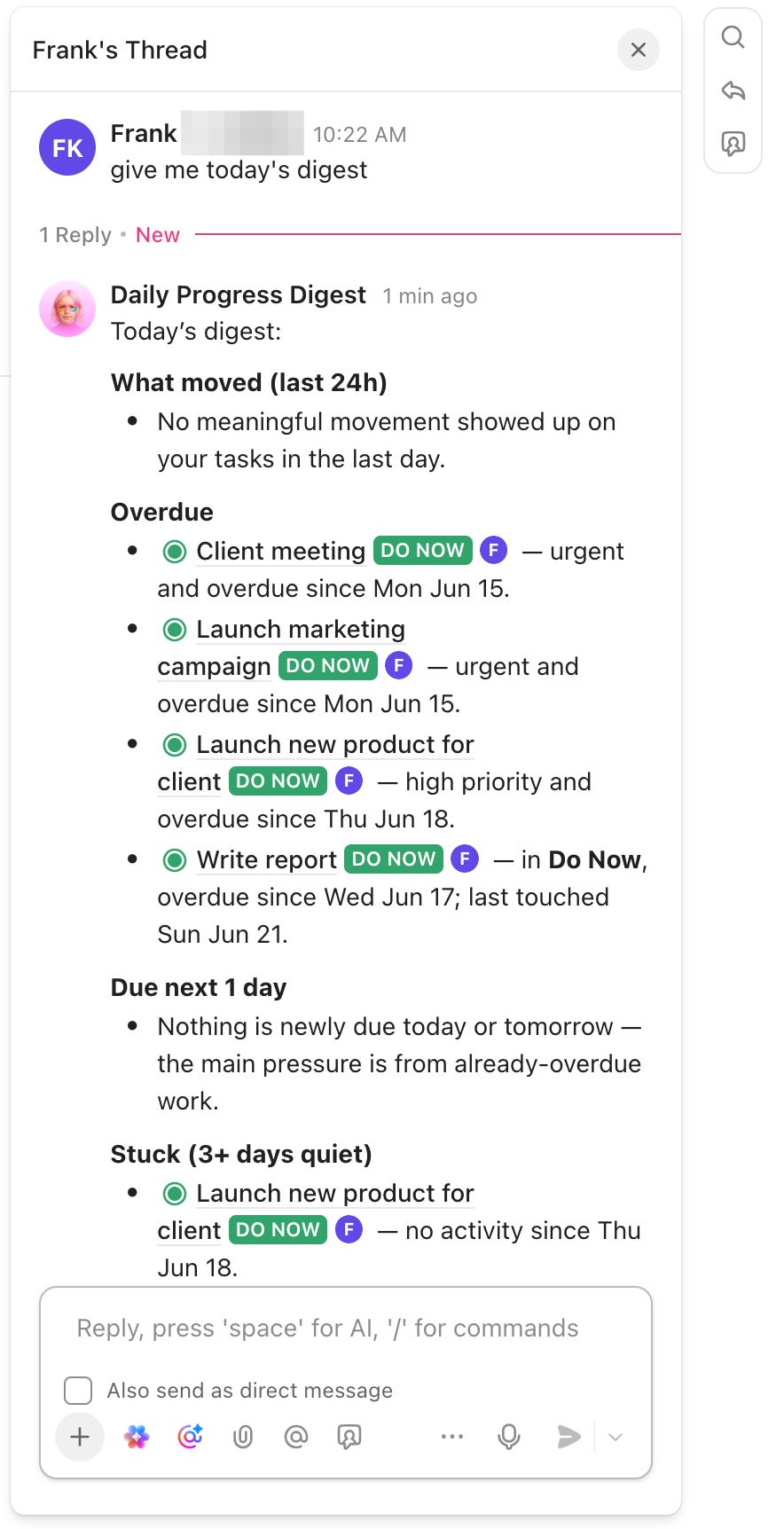
I can see what moved in the last 24 hrs, what’s overdue, due the next day and stuck.
This way, when I open my laptop every morning, I know exactly how my vital 5 tasks are moving and can become more efficient in moving what matters most.
Try it free in ClickUp.
That’s it for now.
Watch out for next week’s productivity insights in your inbox.
As always, fresh ideas are welcome. Please feel free to send in your feedback, thoughts, questions, and suggestions—I read them all!
If you want to pass this newsletter on to a friend, here’s a link to make it easier.
Catch you again soon.
Have a great day :)